This week’s Criterion Tuesday takes us to Hong Kong action cinema at its most feral, with Tsui Hark’s The Blade, a furious, blood-soaked reimagining of the warrior-
samurai genre from the director who became the king of 90s Hong Kong cinema. The film is an adaptation of the classic One-Armed Swordsman, with its story told from a female perspective instead, framed through a young woman speaking of her father, love, and youthful curiosities as she watches the violence of the world around her unfold. The raw action tone is established immediately and never relents, with Hark stripping the wuxia genre of its
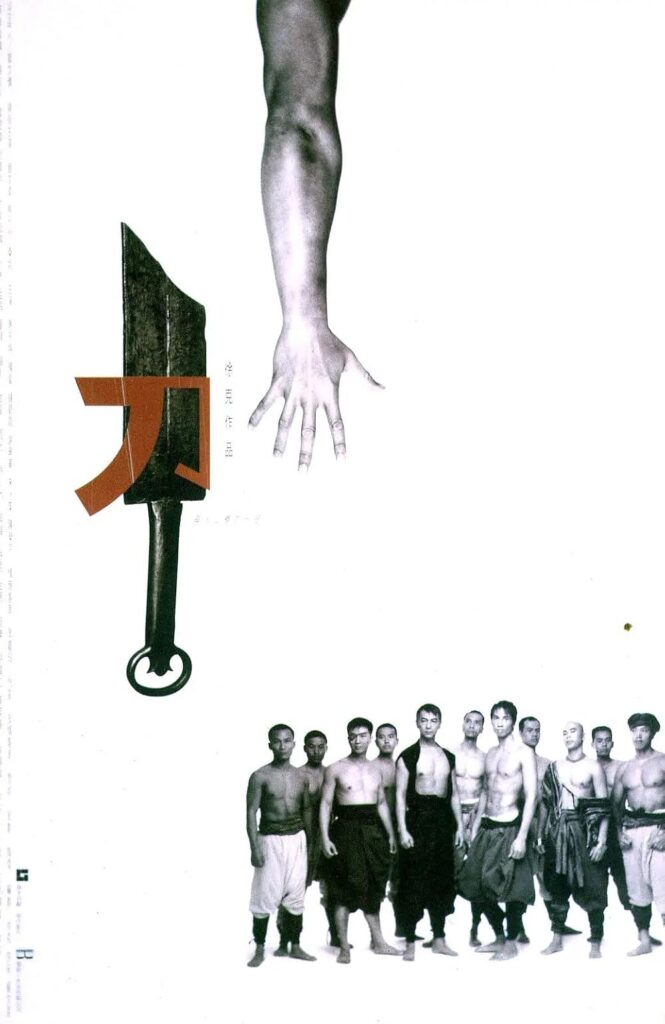
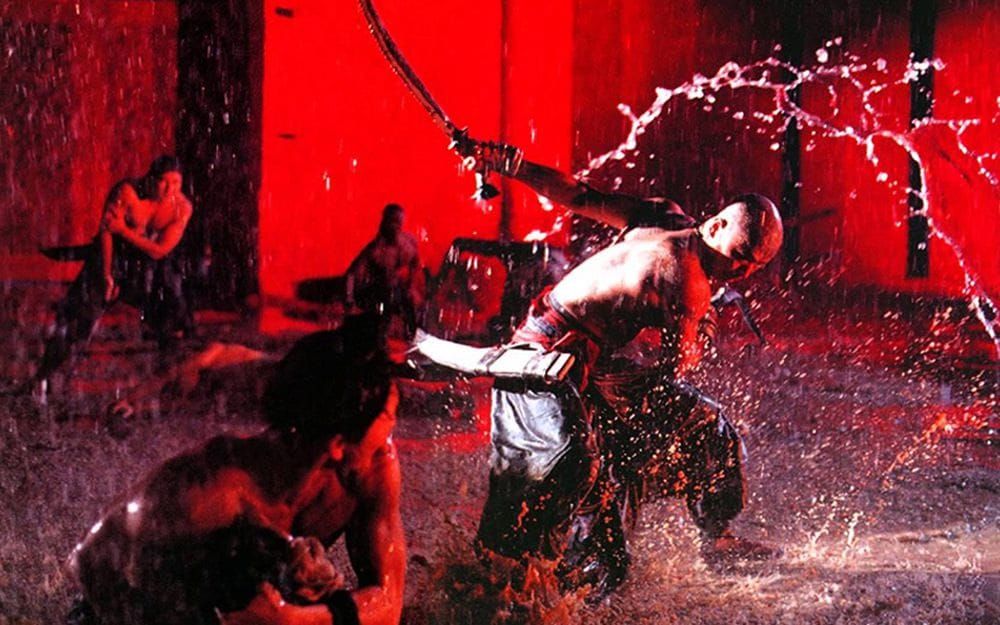
elegance and replacing it with something grimier, faster, and far more dangerous and aggressive. The colors are extremely well orchestrated and the set design consistently impressive throughout, giving the film a distinct visual identity that separates it from every other martial arts film of its era. The Blade stands as one of the crown jewels of ’90s Hong Kong action cinema, a compelling story wrapped around some of the most kinetic and unhinged action filmmaking the genre has ever produced.
The film opens in a town where a monk defends a woman from men trying to take advantage of her, establishing the raw, action‑heavy tone before the story proper has even begun. After seemingly winning, the monk walks into a bear‑trapped alley, the first of many traps laid throughout the film, and is ambushed and beaten by the hunters, immediately signaling that this is a world where victory is temporary and cruelty waits around every corner. Two young men come to his rescue, searching for the hunters but ultimately forced to move on, and after arriving late to their swordsmith job, one of them has to watch as the friend who defended the monk is beaten, the film’s moral stakes laid bare early. The master of the sword‑forging business then leaves the operation to Ding‑On. The main character, whose friend was punished, is visibly upset and is assigned the broken blade that serves as an emblem for the group and for the film as a whole. Ding‑On learns that the broken blade belonged to his father, who fought to the death with him on his back as a baby, a revelation delivered through a flashback whose use of reds and rain is exceptionally well crafted, and becomes the engine that drives everything that follows.
While trying to learn about his father, Ding‑On and the woman he has grown close to are ambushed, and in the aftermath Ding‑On is lost and presumed dead by the village. Instead, he is taken to a farm where he survives but loses his arm, a compelling stretch of story that runs alongside the film’s usual action and gives the middle act a wounded, meditative quality that feels genuinely rare for the genre. While recovering, he comes face to face with Lung, the tattooed man who killed his father and nearly killed him as well, and swears revenge, the film’s central vendetta finally locking into place with real emotional weight behind it. After that night, Siu Ling is left deeply depressed and angered, arming herself with a saber to protect her, while the village grows increasingly violent in Ding‑On’s absence, with Iron Head, Ding‑On’s more aggressive friend, finally taking a stand against the hunters one night. Despite the woman who saved him pleading with him not to, Ding‑On trains to fight with only one arm to avenge his father and himself, learning to wield his father’s broken blade in a training montage set against a blue‑tinted night that stands as one of the most striking sequences in the entire film.
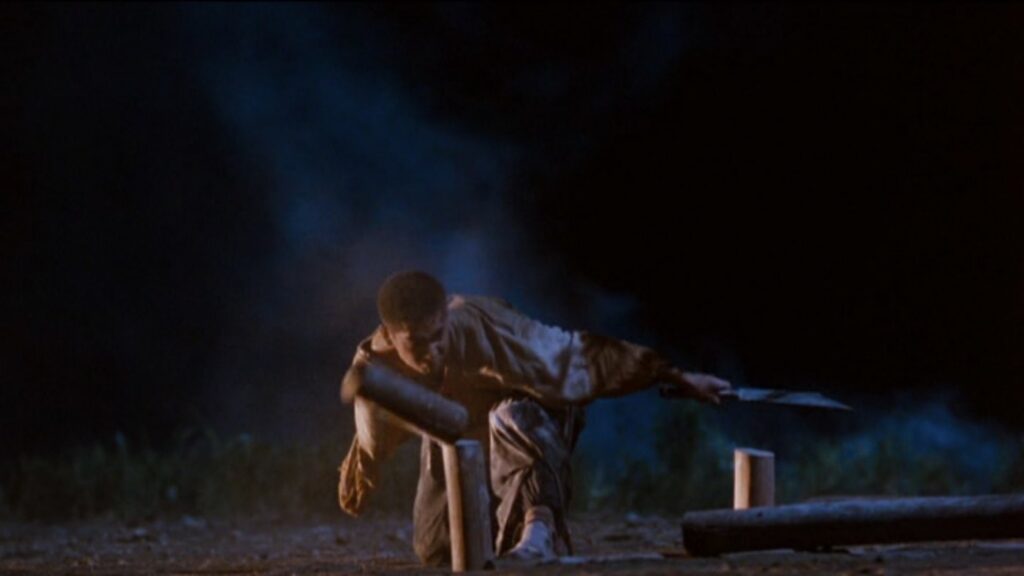
When the battle finally begins, we see Ding‑On fight after his training far stronger than he ever was before, using a spinning, low‑to‑the‑ground style that turns his disability into an entirely new fighting language the genre had never seen. He cuts down the men with painted faces to a booming score behind him — a fantastic score moment — and the shot of the house after the fight is insanely cool, the kind of single image that feels like it could define an entire era of action cinema. Lung and his men hear about the one‑armed fighter and are enraged, setting the collision course for the finale as the film keeps escalating its violence with each successive set piece. Ding‑On saves Siu Ling but keeps his face covered, refusing to reveal his identity and handing her back to Iron Head before disappearing again, the film’s most quietly heartbreaking gesture tucked into the middle of its most explosive stretch. Lung ambushes the swordsmith temple the next day, and as he advances, Ding‑On appears and the two finally face off — Ding‑On is sliced across the back but Lung is cut across the chest, before Ding‑On wins the fight and kills Lung in one of the most ferocious final duels the genre has ever staged.
After the victory, Ding‑On returns to the village and to Siu Ling, but this reunion is revealed to be only Ling’s dream; in reality he never comes back, and she spends the rest of her life waiting for him. This is the only element that genuinely bothers us about the film: the reasoning behind his absence is understandable, but Lung waiting and never seeing Ding‑On again feels forced, as if the director simply refused to allow a happy ending despite the story clearly building toward one. It’s a deliberately cruel final note from Hark, consistent with the merciless worldview the film has built across its runtime, but it lands as an artistic choice imposed on the story rather than one that grows naturally out of it. The framing device still pays off, though, with the female perspective that opens the film closing it as well, her narration transforming the entire story into a memory of violence, love, and absence. Even with that frustrating final gesture, the ending’s ambition is undeniable — a wuxia epic that refuses catharsis in a genre built entirely on it, and a choice that has only grown more discussed and debated in the decades since.
Ultimately, The Blade is Tsui Hark operating at the absolute peak of his powers, the film that helps cement him as the king of 90s Hong Kong cinema and one of the most influential action directors who ever lived. As an adaptation of One-Armed Swordsman, it takes a classic and remakes it into something rawer and stranger, with the hopeless female lead’s framing perspective giving the familiar story an entirely new emotional register. The action filmmaking here remains genuinely staggering thirty years later, with the training montage, painted‑faces battle, and final duel with Lung standing among the greatest sequences in the genre’s history. The refused happy ending remains the film’s one genuine point of contention, an artistic choice we understand but still push back against, and the single thing keeping this from an absolute masterpiece. The Blade is an essential Criterion entry and mandatory viewing for anyone interested in action cinema, a furious, beautiful, merciless near‑masterpiece that demands to be seen and earns a 90/100 from TwilightRoom.
TwilightRoom Score 90.4/100