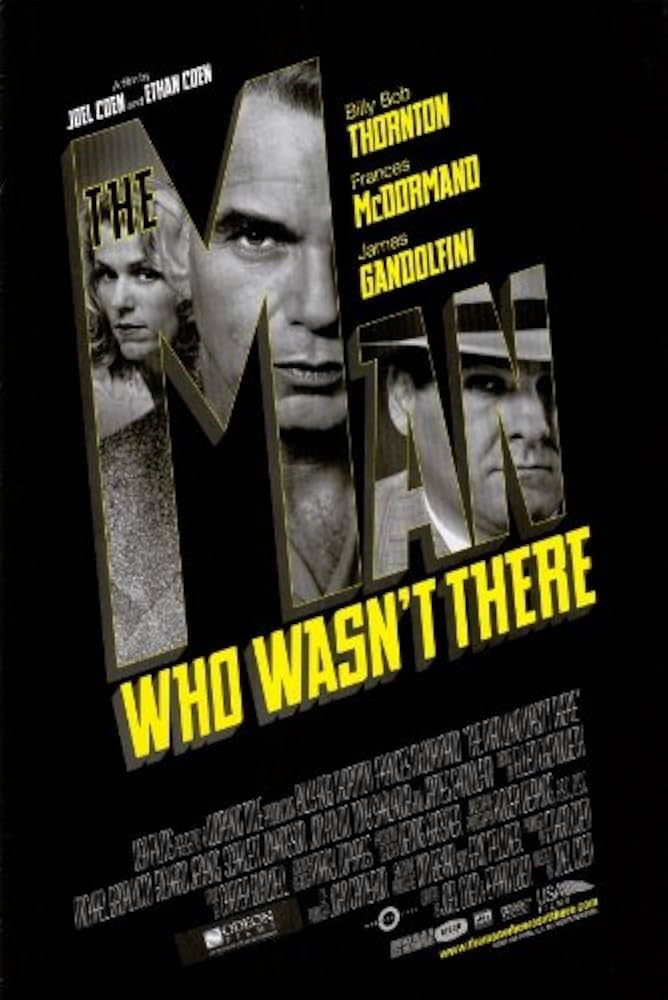
This week’s Criterion Tuesday dives into one of the Coen Brothers’ most atmospheric and stylistically unique films:, the black and white noir-ish The Man Who Wasn’t There, a slow-burn
blending crime, existentialism, and emotional emptiness into one of the more underrated films of their career. Billy Bob Thornton stars as Ed Crane, a quiet California barber whose detached narration and growing dissatisfaction with life slowly pull him into murder, blackmail, paranoia, and complete personal collapse.
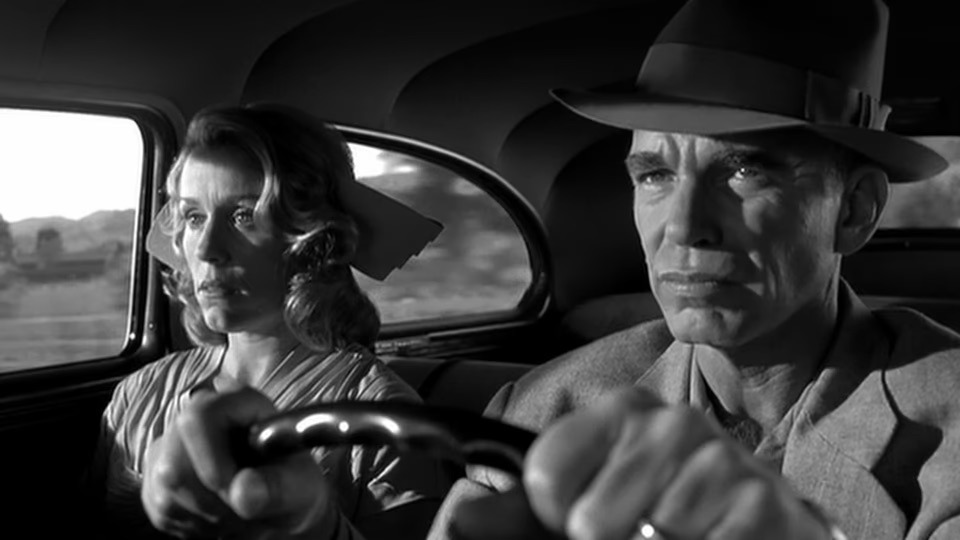
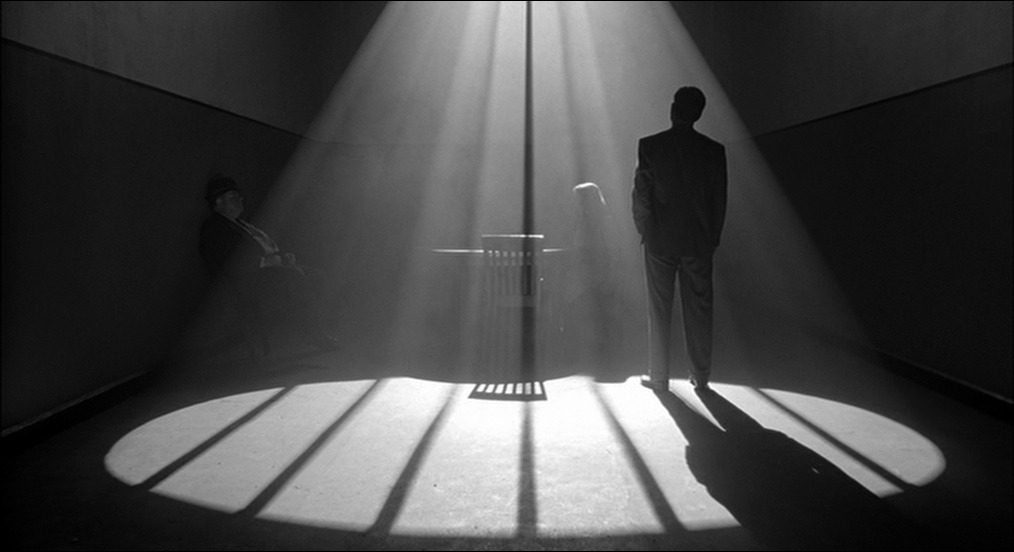
The film fully embraces classic noir storytelling, from cigarette‑hazed frames and femme fatales to shadow‑heavy cinematography in the vein of The Big Heat, hard‑boiled voice‑over narration, and morally broken characters trapped by their own choices. Roger Deakins’ cinematography and Joel Coen’s lighting create one of the most visually striking modern noir films ever made, transforming simple rooms and conversations of crime into eerie isolated spaces. The Man Who Wasn’t There, while intentionally more of a slow-burn and often emotionally distant, succeeds less on traditional thriller excitement and more on its mood, atmosphere, and Billy Bob Thornton’s hauntingly restrained performance.
Ed Crane’s quiet dissatisfaction with his repetitive barber life slowly evolves into something much darker as he becomes increasingly suspicious of his wife Doris and her relationship with businessman Big Dave Brewster. What initially begins as emotional distance and possible infidelity soon turns into blackmail after Ed sees an opportunity to invest in a dry-cleaning business, viewing it almost as an escape from the meaningless routine consuming his existence. The film carefully escalates from awkward conversations and quiet tension into outright violence, making even the smallest interactions feel uncomfortable through the detached narration and eerie pacing. During a late night confrontation, Big Dave attempts to kill Ed, forcing Ed to stab him in the neck in one of the film’s most sudden and shocking moments, fully beginning the noir descent into paranoia and guilt. Rather than becoming a traditional thriller afterward, the movie instead focuses on the emotional emptiness and awkward aftermath surrounding the murder, reinforcing the idea that Ed barely even understands his own actions as his life completely spirals out of control.
Billy Bob Thornton gives arguably one of the most restrained and quietly haunting performances of the 2000s as Ed Crane, a protagonist who often feels emotionally absent from his own life. Ed rarely reacts strongly to anything happening around him, whether it be murder, infidelity, arrest, or emotional tragedy, creating an intentionally uncomfortable distance between the audience and the character. The narration becomes one of the defining aspects of the film, as Ed calmly reflects on the chaos surrounding him almost like he is already disconnected from reality itself. The Coen Brothers organize much of the movie around his stillness and awkward silence, allowing Thornton’s subtle expressions and detached delivery to create a deeply lonely and existential figure rather than a traditional noir antihero. Ed’s obsession with escaping barber life through dry cleaning symbolizes his desperation for meaning and identity beyond endless routine, making him less of an outright criminal and more of a man completely lost within his own empty existence.
Roger Deakins’ black-and-white cinematography is easily one of the greatest strengths of the film, fully embracing classic noir aesthetics through cigarette smoke, shadow-heavy lighting, silhouettes, and beautifully isolated compositions. Joel Coen’s visual direction transforms ordinary barber shops, offices, diners, and hallways into eerie emotionally detached spaces where even simple conversations feel sinister and existentially empty. The film heavily evokes older noir classics like The Big Heat through its voice-over, shadowy lighting, and morally broken world, yet still feels distinctly modern in its pacing and existential tone. Carter Burwell’s subtle score combined with Ed’s narration creates a hypnotic atmosphere where the movie often feels closer to a philosophical dream than a standard crime thriller. The black-and-white presentation never feels gimmicky or forced either, instead becoming essential to the film’s lonely detached identity and helping establish one of the most visually unique Criterion films we have covered so far.
The supporting cast plays directly into the film’s noir identity as nearly every character surrounding Ed contributes to his slow emotional and moral collapse throughout the story. Doris becomes one of the film’s biggest tragedies after being arrested for murders Ed himself committed, while Big Dave evolves from loud businessman into something much more sinister and dangerous beneath the surface. Lawyer Freddy Riedenschneider adds much of the film’s bizarre philosophical humor through his long abstract courtroom speeches, giving the movie moments of strange Coen Brothers absurdity amidst all the darkness and paranoia. Ed’s relationship with Birdy introduces one of the film’s few emotionally sincere storylines, before even that connection eventually collapses awkwardly and tragically, reinforcing the movie’s larger themes surrounding loneliness and emotional repression. Throughout the film, the Coens continually explore invisibility, masculinity, emptiness, routine, and existential despair, framing Ed as almost a ghost drifting through post‑war America, unable to meaningfully connect with the world around him.
The Man Who Wasn’t There released during one of the strongest stretches of the Coen Brothers’ careers and has steadily grown into one of their most respected cult films despite never reaching the mainstream popularity of Fargo or The Big Lebowski. Roger Deakins received an Academy Award nomination for the cinematography, which remains one of the most praised visual achievements in modern noir filmmaking because of its stunning black-and-white compositions and shadow work. Billy Bob Thornton and Frances McDormand both deliver remarkably restrained performances, aligning perfectly with the emotionally detached atmosphere the film so carefully maintains. The movie intentionally pays homage to classic 1940s noir cinema while also quietly deconstructing the genre through existentialism, awkward humor, and emotionally disconnected characters rather than traditional femme fatale suspense. Though slower and more subdued than many Coen Brothers projects, the film has grown increasingly appreciated over time for its atmosphere, narration, striking visual identity, and uniquely haunting portrayal of loneliness within American noir storytelling.
Ultimately, The Man Who Wasn’t There succeeds less as a traditional crime mystery and more as a haunting meditation on loneliness, invisibility, routine, and emotional emptiness within post-war America. Billy Bob Thornton’s subdued performance and Roger Deakins’ black‑and‑white cinematography largely define the experience, resulting in one of the most visually atmospheric films in the Coen Brothers’ career. The film’s slow pacing and emotional distance may alienate some viewers, yet those same qualities are precisely what give it its eerie, hypnotic identity. Joel and Ethan Coen fully commit to noir aesthetics while also quietly deconstructing the genre through awkward silence, existentialism, and detached dark humor. Overall, The Man Who Wasn’t There stands as one of the most fascinating and underappreciated Criterion selections we have covered, blending classic noir tradition with existential tragedy in a uniquely haunting way and earning an 84/100 from the TwilightRoom.
TwilightRoom Score: 84.7/100