Released during the growing rise of television sensationalism during the 1970s, this week’s Criterion Tuesday, Network, stands as one of the sharpest and most
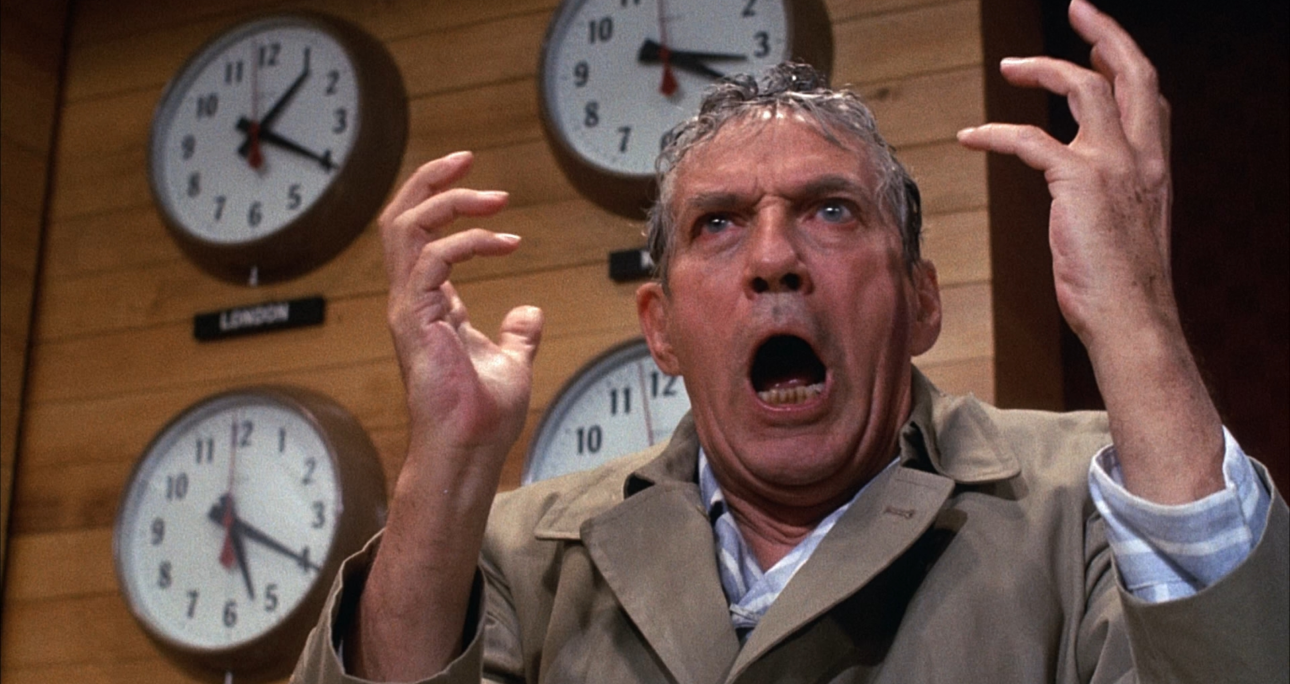
prophetic political satires made about media, entertainment, and the collapse of truth in televised news. The film opens inside the competitive world of network broadcasting as longtime news anchor Howard Beale delivers one of the most infamous openings in all of film, as he suddenly announces live on air that he plans to kill himself during an upcoming broadcast, immediately throwing

the entire television industry into chaos. What initially appears to be a nervous pent up breakdown quickly transforms into a massive ratings phenomenon as network executives realize Howard’s emotional unraveling can be repackaged and monetized as must‑see entertainment. Through brilliantly fast-paced dialogue, corporate manipulation, and increasingly absurd newsroom escalation, the film builds one of cinema’s most accurate critiques of how outrage, fear, and spectacle dominate modern media, making it one of the best Criterion Tuesday’s in our site’s history. Network smashes it out of the park because it perfectly balances satire, drama, dark comedy, and terrifying realism, creating a film that somehow feels even more relevant nearly fifty years later, easily earning its rating as one of the best films of the 1970s.
Howard Beale immediately becomes the emotional and thematic centerpiece of the film as his public breakdown transforms him from a respected longtime news anchor into televised spectacle almost overnight. What begins as a moment of complete mental collapse quickly becomes a ratings goldmine for the network once executives realize audiences are completely captivated by Howard’s anger, honesty, and instability. His speeches initially come across as genuine attempts to call attention to societal collapse, emotional exhaustion, corruption, and the emptiness of modern media culture, but the brilliance of the film is how quickly even authentic outrage becomes commodified by the system itself. Peter Finch delivers one of the greatest performances of the entire 1970s here, balancing sadness, insanity, charisma, sincerity, and satire all at once in a role that somehow feels exaggerated yet terrifyingly realistic at the exact same time. Howard’s rise as “The Mad Prophet of the Airwaves” becomes both hilarious and deeply tragic, turning one man’s emotional collapse into one of the most powerful critiques of entertainment-driven media ever put onto film.
As Howard’s popularity explodes, ambitious producer Diana Christensen quickly emerges as one of the most fascinating and terrifying characters in the film, functioning almost as the embodiment of profit-driven television sensationalism. Diana constantly pushes the network further away from journalism and deeper into entertainment disguised as truth, pitching increasingly absurd and provocative ideas simply because they generate ratings and public attention. Faye Dunaway is absolutely phenomenal here because she never plays Diana as some cartoon villain, but rather as someone fully consumed by the business culture surrounding her, where morality barely even exists anymore. The relationship between Diana and Howard becomes one of the film’s strongest examples of corporate exploitation, as the network manipulates Howard’s instability while pretending they are giving him purpose and a platform. The film’s commentary on media executives chasing spectacle over truth feels unbelievably accurate today, honestly even more relevant now than it likely felt during its original release nearly fifty years ago.
One of the film’s greatest strengths is easily its unbelievably sharp screenplay and insanely fast-paced dialogue, which perfectly fits the chaotic office-building and broadcast setting the story takes place within. Paddy Chayefsky’s writing here is aggressive, smart, exhausting, funny, and deeply uncomfortable all at once, with nearly every line carrying some broader commentary on media, capitalism, or the slow collapse of social and moral norms. Conversations about ratings, truth, emotional exploitation, audience manipulation, and corporate greed move at such a rapid speed that the movie almost feels overwhelming in the best way possible. Even quieter scenes carry underlying tension because nearly every character in the film feels motivated by ambition, survival, greed, or the desire for relevance within the system. The satire works so brilliantly because it constantly balances dark comedy and realism together naturally, making many scenes initially hilarious before the actual implications behind them become deeply disturbing afterward.
Network’s greatest achievement is easily its commentary on the transformation of news into entertainment and emotional spectacle rather than actual journalism. Howard’s rise as a television phenomenon perfectly represents how media companies weaponize outrage, fear, instability, and emotional vulnerability in order to capture audience attention and maximize ratings. The film argues that truth itself becomes almost irrelevant once spectacle and profit begin controlling the structure of televised information, creating a media system where emotional reactions matter far more than factual reporting. Howard’s iconic “I’m mad as hell and I’m not going to take this anymore!” Speech remains one of the most powerful and culturally relevant scenes in film history because it still reflects modern public frustration and emotional burnout decades later. Nearly every prediction the film makes about sensationalism, performative outrage, media manipulation, and entertainment-focused broadcasting feels disturbingly accurate in today’s social media and 24-hour news environment.
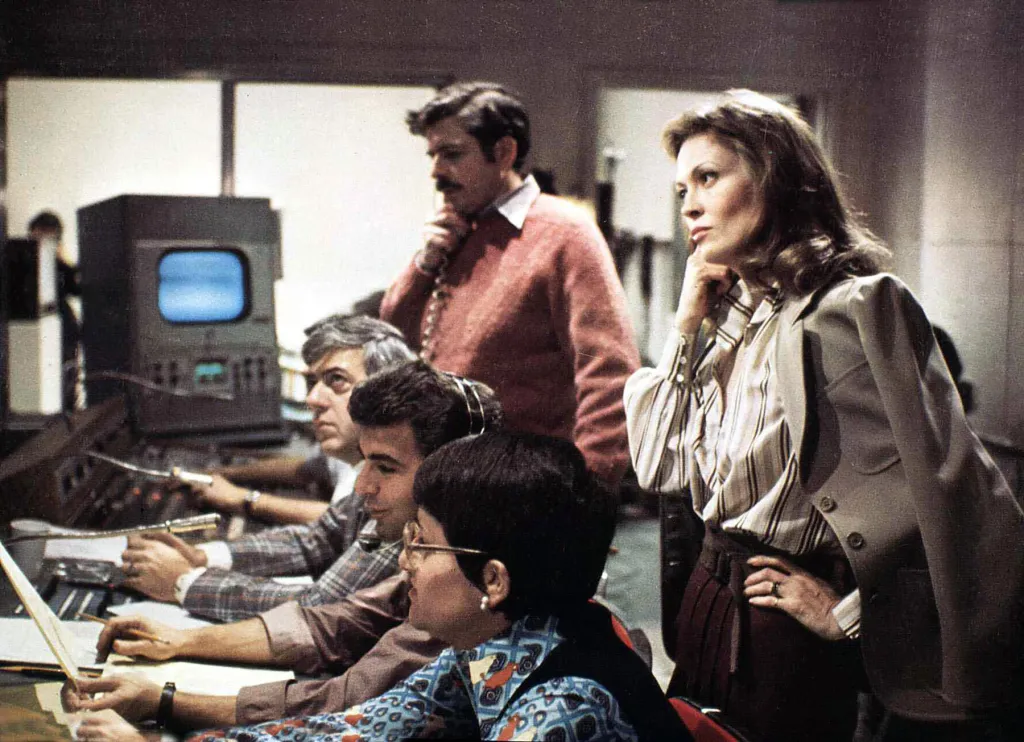
Beyond the screenplay itself, the performances across the board elevate Network into something truly legendary, particularly Peter Finch, Faye Dunaway, and William Holden, all of whom completely dominate nearly every scene they are in. Sidney Lumet directs the film with incredible precision and energy, somehow making offices, boardrooms, television studios, and newsroom conversations feel as tense and cinematic as major action sequences. The cold corporate environments and nonstop television production aesthetics reinforce the dehumanizing atmosphere surrounding every character throughout the story, making the network itself almost feel like the true villain of the film. What makes Network so remarkable today is how little it feels like an exaggeration when set against the modern media landscape, where outrage, emotional manipulation, spectacle, and ratings have come to dominate so much of our public discourse. Nearly fifty years later, Network somehow feels less like satire and more like a horrifyingly accurate prediction of modern entertainment news culture, solidifying itself as one of the smartest, funniest, and most important American films ever made.
As Howard’s popularity grows, the network increasingly treats him less like a human being and more like a profitable product capable of generating massive ratings. Executives continuously manipulate Howard’s mental decline for entertainment value while pretending his broadcast represents authenticity and public truth. The film becomes increasingly disturbing because nobody within the corporation genuinely seems concerned with Howard’s emotional well-being once profits become involved, Network brilliantly critiques how corporations absorb rebellion itself, turning even anti-establishment outrage into another form of marketable content. The movie’s boardroom scenes become some of the most intense moments in the film because they strip away any illusion that journalism still exists in the same way within the network system it once did.
The film constantly balances star, comedy, drama, and psychological collapse without ever losing narrative momentum or thematic focus, Its cold corporate environments and television studio aesthetics help reinforce the dehumanizing atmosphere surrounding the character throughout the story. What makes Network so powerful today is how little it feels like an exaggeration fifty years on, especially when set against the current state of online media and entertainment culture. The film’s warning about outrage‑driven broadcasting, audience manipulation, and the death of truth has only grown more relevant with time, perhaps reaching its peak impact right now in 2026.
Network remains one of the most intelligent, relevant, and sharply written films ever made about media, capitalism, and the transformation of truth into entertainment spectacle. Its blend of brilliant performances, legendary dialogue, dark humor, and chilling realism lets it feel almost timeless, even nearly half a century after its release. Howard Beale functions simultaneously as a tragic victim, media icon, and societal warning, marking his character as one of the most unforgettable figures and a defining voice in all of American cinema. This film’s commentary on rating culture, corporate greed, and emotional exploitation feels arguably even more accurate today than it did during its original release 50 years ago. Ultimately, this week’s Criterion Tuesday film is stunning, as Network stands not only as one of the greatest media satires ever made, but also as one of the defining films of the 1970s and among the most prophetic works in American cinema, earning a 95/100 from TwilightRoom.
Twilight Room Score: 95.7/100