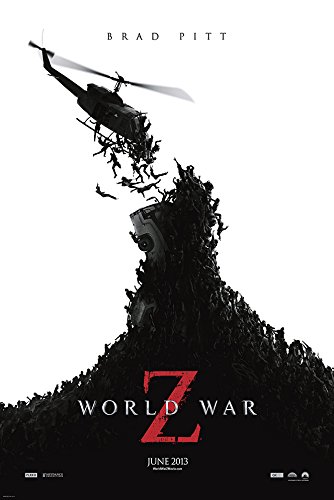
This week’s Throwback Thursday comes from another physical media watch of the 2013 Zombie apocalypse blockbuster, World War Z.
The film takes the zombie apocalypse and scales it up to a large-scale spectacle of massive proportions, turning what could have been a smaller survival horror story into a globe-trotting disaster film built around the speed, chaos, and pure number of humans turning against the population. The film introduces Gerry Lane,
played by Brad Pitt, as the only real character of substance as a former UN investigator suddenly thrown into a worldwide catastrophe while trying to protect his family. The opening outbreak sequence immediately established the film’s high-scale intensity, using collapsing cities, exploding cars, and mass panic to create one of the genre’s largest scale setups to date. Unlike many smaller‑budget or more traditional slow‑burn zombie films, the infected here move aggressively and in overwhelming numbers, making the film far more action‑oriented than the usual horror‑driven approach. works best as a high‑energy blockbuster, packed with large‑scale action set pieces, but its emotionally thin storyline and surface‑level characters keep it from reaching the heights of the genre’s best zombie films.
The film swiftly frames the apocalypse as a sudden, worldwide event rather than a localized outbreak, broadening the stakes immediately. Gerry’s journey becomes mission-based, as he is picked up and taken to a carrier where his family stays while he attempts to find a solution to fight back against the undead, moving from location to location searching for answers, and a possible cure. The narrative constantly shifts settings, keeping the pacing really quick, not dwelling much on emotion and preventing the film from ever slowing down and finding a way to connect beyond just entertainment. The structure feels almost episodic, with each location, Jerusalem, the plane, the laboratory, playing like its own contained set piece, staging another massive zombie pursuit underscored by high‑octane music. The stakes remain consistently high because the film constantly reinforces just how rapidly humanity is collapsing, making even the end of the film so much more focused on the chase than the solution.
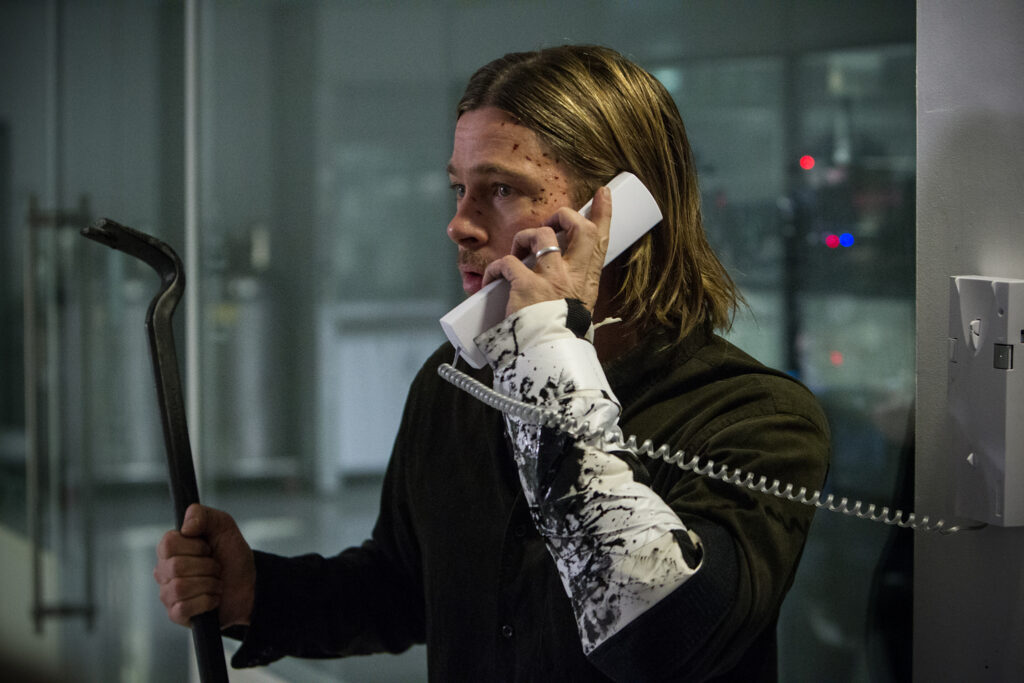
Brad Pitt’s performance is really what holds World War Z together structurally, bringing a calm and collected presence to a film that is otherwise built almost entirely on chaos and movement. Gerry Lane is less of a traditional action hero and more of a problem solver, someone constantly attempting to stay one step ahead of complete collapse while navigating impossible situations around the world. Unfortunately, outside of Gerry, the film really lacks memorable or emotionally layered supporting characters, especially when it comes to his family, who mostly act as motivation rather than real developed people. That emotional disconnect becomes one of the film’s biggest flaws, because while the movie constantly tells the audience Gerry is fighting for his family, it never really spends enough time building those relationships beyond surface level concern. Still, Pitt’s screen presence and the urgency he brings to every sequence keeps the film moving, making Gerry a consistently engaging lead even when the material around him is fairly thin.
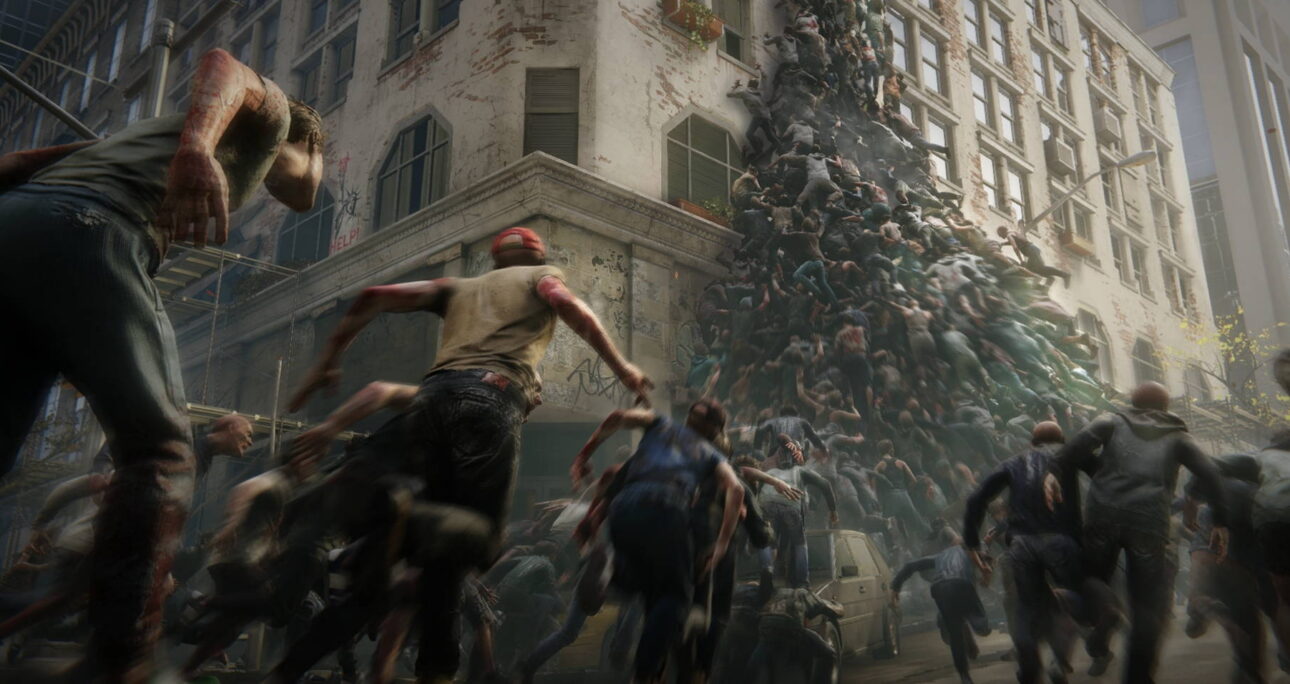
The infected themselves are easily the film’s most memorable aspect, completely redefining the zombie concept into something far more aggressive and overwhelming than traditional undead portrayals. Rather than slow-moving horror icons, these zombies operate almost like a swarm or natural disaster, climbing over one another in giant masses and attacking with terrifying speed. The Jerusalem sequence especially highlights this concept at its strongest, as the infected literally begin forming climbing towers over the massive walls protecting the city, creating one of the most visually memorable set pieces in modern zombie cinema. Horror in World War Z comes much more from scale, panic, and lack of control than atmosphere or psychological terror, leaning heavily into spectacle over dread. While the film may lack the emotional weight or thematic depth of genre classics, the pure visual concept of these zombies and the overwhelming pressure they create is undeniably effective and helps separate the movie from other zombie apocalypse stories.
That blockbuster focus continues directly into the film’s action sequences, which are without question the movie’s greatest strength and the reason it remains such an entertaining watch over a decade later. Nearly every major set piece is built around movement, escalation, and survival under pressure, whether it is the collapsing streets during the opening outbreak, the Jerusalem invasion, or especially the intense plane sequence that acts as the film’s biggest spectacle moment. The pacing during these scenes is relentless in a way that perfectly matches the type of infected the film created, constantly pushing Gerry from one dangerous scenario into another without much time to recover. Visually, the scale is impressive throughout, using massive crowds, destruction, and chaotic camera movement to make the apocalypse feel genuinely global. Even if the film lacks stronger emotional substance underneath, the action and set pieces are so consistently entertaining and well-constructed that they successfully carry the movie for most of its runtime.
The film’s themes explore survival like most of the genre through intelligence and adaptability rather than brute force or military strength. Humanity’s inability to properly resign to a worldwide crisis becomes a recurring idea throughout the film even when we are in the last fully surviving community in Jerusalem. Gerry’s eventual discovery involving disease and camouflage introduces one of the film’s more creative survival concepts, that using a pathogen for a deadly disease the humans can protect against the zombies, as they are looking for healthy hosts, a short-term solution to buy long-term time. The film touches on the ideas of sacrifice through this angle, global cooperation to something so desperate, and survival instinct, though talking about the themes here in a film that so clearly doesn’t attempt to address them deeply is slightly superfluous. Its a film that’s supposed to tell the audience Gerry is doing this for family protection, but its not convinced much at all, and therefore really comes short on setting up themes to build nuance beyond a blockbuster spectacle.
The film’s pacing is both one of its biggest strengths and biggest weaknesses, constantly moving at such a rapid pace that the audience is almost never given time to sit with the emotional consequences of what is happening. The narrative structure feels episodic in nature, with each location acting as its own contained zombie set piece, whether that’s Jerusalem, the airplane, or the WHO laboratory, all functioning almost like levels in a video game campaign. That structure keeps the film highly entertaining and consistently engaging on a surface level, but it also prevents the story from developing much emotional depth or thematic nuance beyond survival spectacle. The third act especially feels noticeably rushed considering the massive worldwide scale the film spends so much time building up, with the solution arriving quicker than expected for a film centered around the collapse of humanity itself. World War Z never really slows down enough to become emotionally impactful, instead staying focused almost entirely on maintaining momentum and tension from one sequence to the next.
The final act shifts away from the giant large-scale destruction sequences and instead becomes a quieter suspense-driven sequence set inside the WHO laboratory, creating a different kind of tension than the rest of the film. Gerry’s plan involving deadly pathogens and camouflage against the infected introduces one of the more clever concepts in the movie, forcing him to risk infecting himself in order to survive and test the theory. This section relies much more on stealth, silence, and close-quarter suspense than the overwhelming zombie chaos seen earlier, which helps give the finale a different feeling stylistically, even if it still moves quickly. While the reveal and solution come a bit too easily considering how catastrophic the outbreak had been presented globally, the sequence itself remains entertaining because of the pressure and risk surrounding Gerry’s decision. The ending focuses less on defeating the apocalypse outright and more on giving humanity a fighting chance moving forward, closing the film on a hopeful note, while still leaving the world in a state of collapse.
World War Z ultimately works best as a fun, high‑energy, decade‑throwback zombie blockbuster that prioritizes entertainment and spectacle over deeper horror. While it lacks the emotional weight and layered storytelling of films like 28 Days Later or Train to Busan, it succeeds in delivering memorable large-scale zombie action. Brad Pitt’s performance and the film’s global scale help elevate what is otherwise a fairly basic storyline that only aims to add a little bit of high-budget fun to the genre. As a whole, the movie is entertaining and a fun physical 4k rewatch, visually memorable, but conceptually distant, lacking the substance needed to stand with the genre’s very best films, earning it a 67/100 from the TwilightRoom.
TwilightRoom Score: 67.4/100