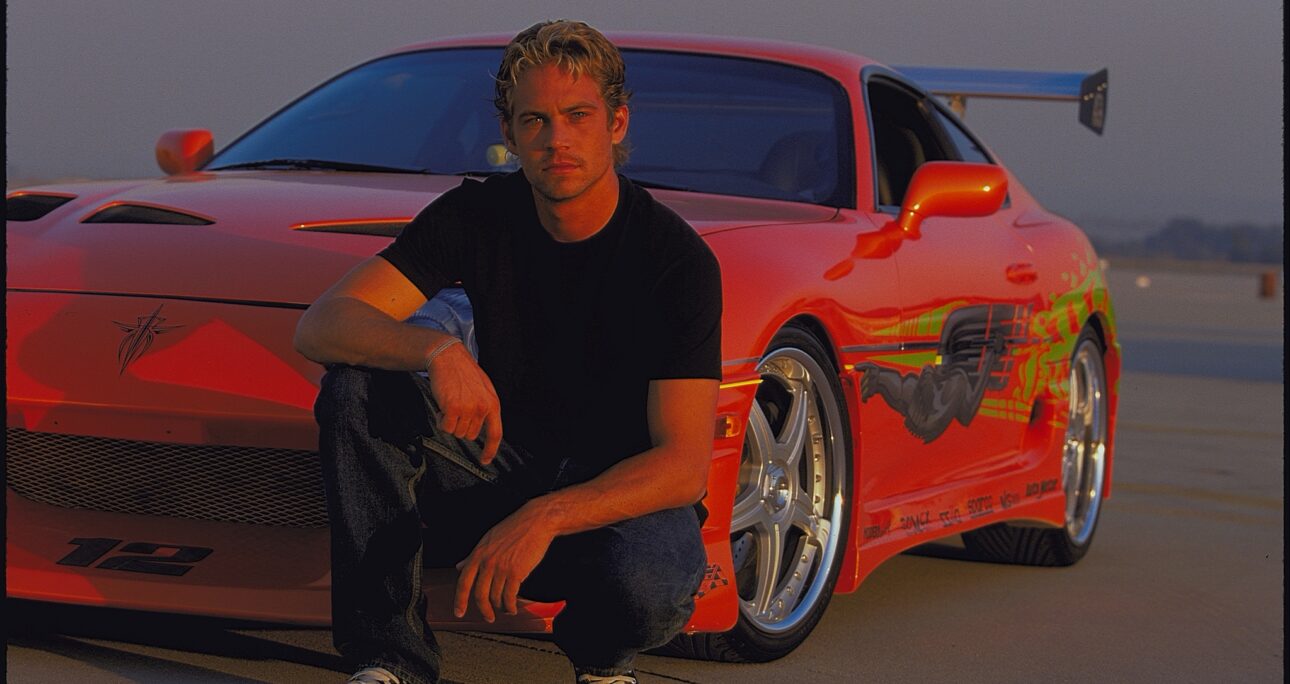
This week’s Throwback Thursday takes us back to the film that launched one of the biggest franchises in cinema history, as The Fast and the Furious introduces
Brian and the Toretto family led by Dom, played by Vin Diesel, inside a car racing culture that is as cheesy as it is genuinely entertaining. The film struggles to place good writing and acting at the forefront in any meaningful way, with dialogue that lands closer to functional than memorable across most of the runtime and performances that rarely rise above serviceable. What it does excel at, and excel at enormously, is building a culture and a
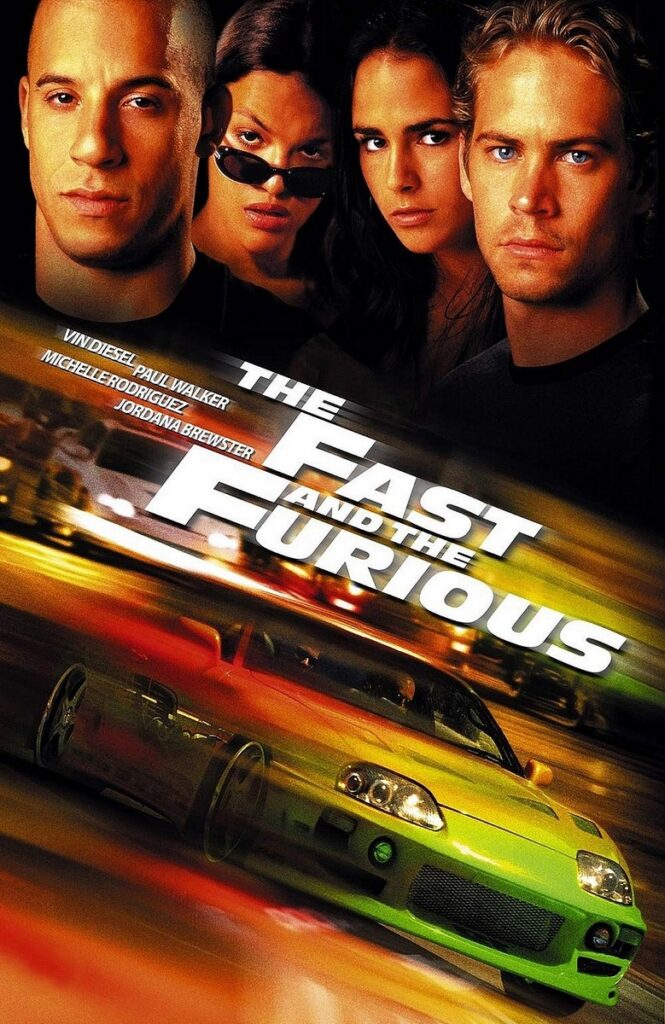
fandom that have become genuinely iconic and completely unforgettable, which is a far rarer achievement than a well-constructed screenplay. The Fast and the Furious is ultimately a fantastic first entry with very clear flaws, the kind of movie that works better as an entertaining nostalgic action hit than as a great film in any traditional sense, as it stands as the foundation of an empire, and it’s genuinely worth remembering just how small and scrappy that foundation actually was.
After a car racing night that pulls Dom and Brian together, the two immediately become friends, establishing the bond that would go on to carry this entire franchise for the next twenty-plus years. It’s then revealed that Brian, played by Paul Walker, is an undercover cop, which complicates everything about that friendship and gives the film its only real source of narrative tension throughout. The film leans hard into the culture surrounding the racing rather than the racing itself, which is exactly why the world-building lands so much harder than the plot mechanics ever do. As the story moves toward its breaking point, Brian needs to make a decision between sticking with the new family he’s found and a new love interest, and arresting Toretto, a decision that ends up marking the entire franchise going forward. The film ends with the two together as Dom forgives Brian after he helps get revenge on a dead member of the family and then helps Dom evade the police entirely, finally providing him with that ten-second car he promised.
The writing and acting are consistently the film’s weakest elements, never rising above serviceable and frequently dipping well below it in stretches where the plot demands actual emotional weight. What the film gets right instead is atmosphere, capturing a specific moment in early-2000s car culture with enough authenticity that audiences genuinely wanted to live inside it rather than simply watch it. The racing sequences themselves are shot with real energy, prioritizing speed, noise, and texture over coherence in a way that works entirely in the film’s favor. The family theme that would come to define the franchise is already fully present here, and it’s by far the single most important thing the film establishes for everything that follows. That specific combination of cheesiness and total sincerity is precisely why this film has proven so durable while dozens of similar early-2000s action pictures have vanished from memory completely.
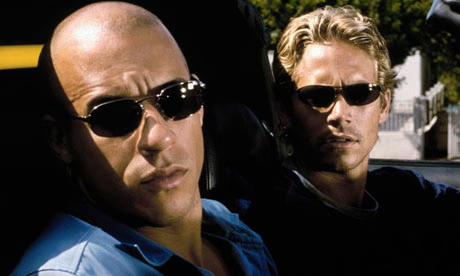
Brian’s choice between the badge and the family is the moment that defines not just this film but every single entry that follows it across the next two decades. Letting Dom go rather than arresting him establishes the franchise’s entire moral framework: that loyalty outweighs law in every possible circumstance, and the series has never once wavered from that position since. That decision also permanently reframes Brian as an outsider to both worlds, a position the character occupies for the rest of his time in the series and one that gives him a melancholy the films rarely acknowledge directly. The revenge subplot involving a dead member of the family gives the finale its emotional weight, however thinly developed that thread actually is on the page. It’s a genuinely smart ending for a film that otherwise runs almost entirely on vibes, closing on a choice rather than a chase.
The film was conceived after director Rob Cohen read a 1998 Vibe magazine article titled “Racer X” about illegal street racing, and it obtained its actual name through a deal purchasing it from a B movie, one of the strangest starts to a franchise in film history. Cohen conceived the entire project as Point Break with cars, taking the undercover cop premise wholesale and transplanting it into the Los Angeles car racing scene. Timothy Olyphant was originally cast as Dom Toretto, but the role eventually transferred to Vin Diesel, who actually had to be persuaded to take it before it became the biggest role of his entire career. The film was made on a $38 million budget and grossed $207 million, immediately greenlighting a sequel that both Cohen and Diesel declined to return for, though the franchise became so successful that Diesel almost had to come back. Paul Walker, the actor most adamantly attached to the series, died in 2013, casting a permanent retrospective weight across the entire franchise and reframing what had been a commercially reliable but critically middling series into something carrying genuine emotional history.
The Fast and the Furious is a film whose reputation has been almost entirely shaped by what came after it, and revisiting it now means confronting how small and simple the original actually was. Its writing and acting remain the clearest weaknesses, never rising above functional in a film that has far bigger ambitions on the cultural side than the narrative one. The world-building and the family theme are what actually endure here, establishing a foundation durable enough to support nearly a dozen sequels and a fandom that has never really let go. The franchise has since become the seventh highest-grossing in history, exceeding $7 billion, a return that is genuinely exponential from that original $38 million budget. At a 79.0/100 rating from TwilightRoom, The Fast and the Furious is more of an entertaining nostalgic action hit than a great film, but it’s the entertaining nostalgic action hit that built an entire empire.
TwilightRoom Score: 79.0/100