Jordan Firstman does the impossible: he shoots his directorial debut Club Kid like no other New York film has ever been shot
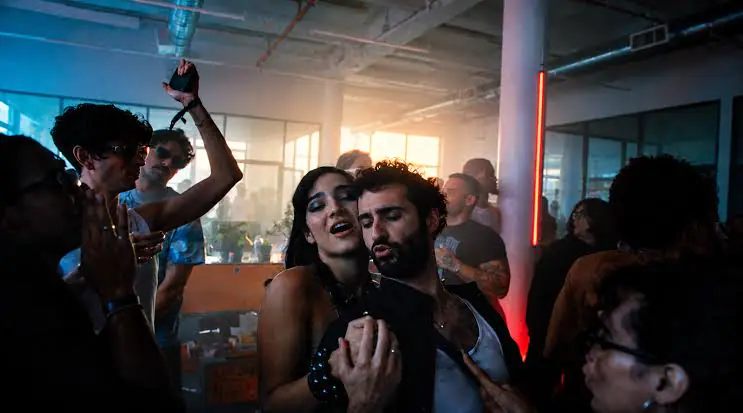
before, blending a completely typical Manhattan setting with a style so specific to himself that the city looks somehow different than it ever has. The opening sequences of Club Kid create a vibe for Firstman’s Peter that he will spend the rest of the film moving forward from, establishing a rock bottom of self-worth with enough precision and intention that every camera shot, style choice and lighting arrangement is able to seamlessly and elegantly form around. The film
feels real from its opening spinning Uber shot to the ambiguous yet hopeful emotions it ends with, delivering authenticity rather than anything performative, one of the hardest things to pull off in modern filmmaking, especially with the stylized approach this movie demands. It offers as strong a first-film feel for New York as any movie ever has, a debut that understands its city deeply and its characters even more so, and immediately separates Jordan Firstman’s Club Kid from the endless stream of movies that walk the same streets, explaining why its post-Cannes bidding war was so intense. Club Kid is one of the greatest films of the year, carried by a magnificent Firstman performance and a directorial debut made with real passion and direction that truly speaks to its audience through every aspect that makes the film medium so beautiful, announcing a filmmaker who knows exactly what he wants and deserves to be championed for it.
Peter is a washed-up underground party promoter whose entire existence runs on nightlife, momentum and the ability to never stop moving long enough to be looked at, and Club Kid spends its first stretch letting us live inside that world rather than explaining it from a distance. The arrival of Arlo, the ten-year-old son Peter did not know existed, reframes the whole story after a wonderful run of character and vibe setup, and the reframing lands precisely because Firstman made us care about the world before he detonated it. Cara Delevingne’s Sophie as Peter’s business partner and Diego Calva’s Oscar as Arlo’s social worker give the film its two opposing pressures, one pulling Peter back toward the life he built and one pushing him toward the life he now has no choice but to figure out. Once Arlo shares his own trauma, the plot arcs cleanly into its real subject, because from that moment forward both of them need something repaired, and neither one is remotely equipped to do the repairing alone. The film is enormously intentional about all of this and speaks to death and trauma in a genuinely smart way, never treating either as a device to move a scene along and never letting a joke—and there are many great ones—step on the thing sitting underneath it.
Adam Newport-Berra’s 35mm cinematography is the backbone of the whole film, and the camera is always intentional even inside the most stylized sequences, sitting clean on Peter or pushing right up on him depending on how much the movie is willing to let him hide in that moment. The fashion speaks its own language in every single scene and is very clearly a favorite instrument of Firstman’s, communicating who these people are and precisely what they are performing far more efficiently than any line of dialogue ever could. The lighting in the New York park sequence is used brilliantly, one of several moments where the film quietly proves that its visual confidence is not limited to clubs, neon and crowded rooms, and that Firstman can find the same specificity in daylight. After a drastic change in Peter’s circumstances, the film flips its entire mood coming out of a stunning, dark apartment scene, and the editing from Taylor Levy and Sofia Subercaseaux handles that pivot so well that a tonal shift that should feel abrupt instead registers as inevitable. Cristobal Tapia de Veer’s score keeps a party pulsing somewhere underneath even the quietest scenes in this film, which is exactly the right instinct for a movie about a man who has organized his whole life around never having to sit still.
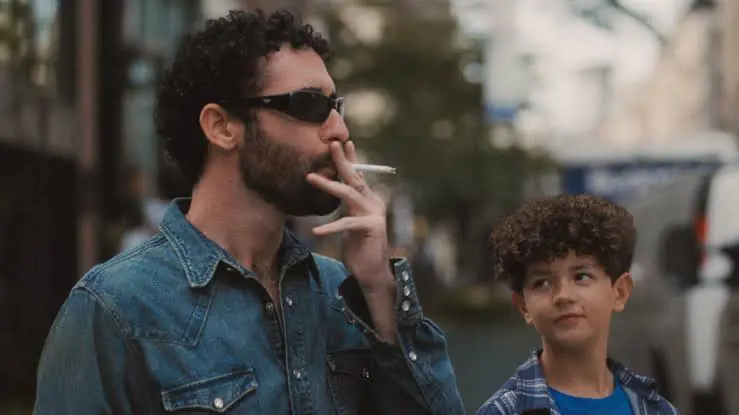
The second half of Club Kid is so much more reflective than anyone walking in should anticipate, and rather than deflating the energy of the first hour, it redirects all of it into something positive, funny and genuinely important. The conversation between Peter and Arlo’s new therapist, soon to be his partner, about Peter’s childhood, and about normalizing the difficulties of a childhood that was never normal in the first place, is the best-written scene in the movie and the one that retroactively justifies everything the film has been attempting since its first frame. Watching Peter try to parent while still actively processing having lost a parent himself is where Firstman’s performance moves from very good to extraordinary, because he refuses to let Peter become either a lovable screw-up or a tidily reformed man. Reggie Absolom’s Arlo never plays as a plot device or a lesson, and the relationship works because the film allows both of them to be truly difficult rather than turning the kid into a vehicle for his father’s growth. It would have been so easy for a film this stylish to treat its emotional material as a detour from the thing it does well, but instead the back half is exactly where Club Kid becomes the best version of itself.
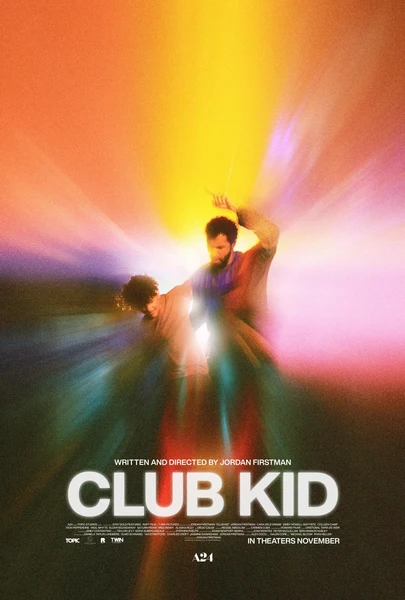
Jordan Firstman wrote, directed and starred in Club Kid, his feature directorial debut, shooting on 35mm with Adam Newport-Berra and producing through Topic Studios alongside Rapt Film and Twin Pictures. It premiered at Cannes in Un Certain Regard in May 2026 and drew a seven-minute standing ovation, with Firstman nominated for the Prix Un Certain Regard and the film competing for both the Caméra d’Or and the Queer Palm. A bidding war followed almost immediately, with Mubi, Focus Features, Searchlight and Black Bear all reportedly making offers before A24 took worldwide rights for $17 million within days of the premiere. It played Telluride for its North American premiere before heading to Toronto and the Spotlight Gala at the New York Film Festival, picking up the Breakthrough Filmmaker Award at Middleburg along the way. A24 put it into limited theatrical release on November 6, and it arrived carrying near-universal acclaim, with critics repeatedly singling out how loving, honest and non-judgmental its portrait of queer party culture is.
The film finishes dark and emotional, and it absolutely earns that ending, but the final sequences are also the only place where Club Kid comes close to stumbling, because they carry real feeling with noticeably less of the style that defines everything preceding them. That drop-off is the one true flaw here, as a movie this visually assured should not save its least visually interesting stretch for the part asked to carry the heaviest weight. The closing shot of Peter looking up toward the party, and the cut to a sunset rendered in the exact color scheme the film has been working in all along, is a perfect example of what the entire third act should have delivered far more of. None of that keeps this from being a remarkable piece of work, because the ambition, the specificity and the emotional honesty on display are all considerably rarer than a tidy final act. Club Kid is one of the greatest films of the year and one of the best debuts in recent memory, announcing Jordan Firstman as a filmmaker with real passion and real direction who deserves every bit of the attention coming his way. It earns a 95/100 from TwilightRoom.
TwilightRoom Score 95.6/100