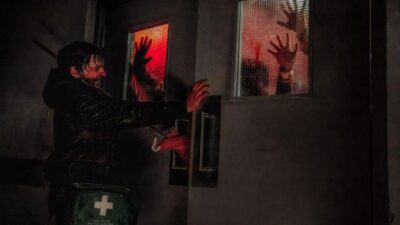
One of the quieter and more psychologically unsettling indie films to emerge from Tribeca, Iconoclast sees charismatic The Night Agent star Gabriel Basso directing and starring, using
modern internet culture, loneliness, and parasocial obsession to create a deeply unsettling character study that slowly transforms into near psychological horror. The film follows Connor, an awkward and antisocial young man who becomes increasingly obsessed with an online streamer Nika, who appears both on

screen and as his own illusion, withdrawing him further from reality and healthy relationships. The film intentionally creates an eerie atmosphere through silence, minimal score usage, uncomfortable pacing and an almost voyeuristic feeling toward Connor’s mental collapse and loneliness. Iconoclast succeeds most through mood, paranoia, and psychological discomfort, creating a haunting modern commentary on Internet obsession in its directorial debut, even if certain narrative and visual elements never fully realize their potential to elevate the film into something great.
Connor is immediately presented as socially isolated, emotionally and physically awkward, and deeply detached from real human connection despite appearing relatively quiet and harmless on the surface from a first-person perspective. His obsession with streamer Nika, played by Courtney Eaton, quickly establishes the film’s central psychological conflict, as he begins imagining her physically inside his room and having conversations with him. The hallucinations function as both fantasy fulfillment and self-destructive negative self-talk, slowly pushing Connor further away from reality and his own stability; it’s chillingly real. The film does a great job at portraying this modern idea of a parasocial relationship as emotionally addictive rather than romantic, emphasizing Connor’s desperation to feel seen, understood, or valued by someone. In a festival celebrating the anniversary of the great film Taxi Driver, Basso tackles a more modern-age version of the story extremely well here. The intimacy and quietness of the filmmaking makes Connor’s loneliness feel incredibly uncomfortable, authentic, and suffocating, allowing the indie sensibility to work in Basso’s favor, especially as the audience watches his character slowly detach from healthy behavior and reality itself.
The introduction of Morgan, played by Rain Spencer, best known for The Summer I Turned Pretty but excellent in her role here, provides the film’s emotional counterpoint to Nika, representing a genuine real-world relationship opportunity rather than Connor’s fabricated Internet fantasy. The two’s interactions feel awkward but authentic, emphasizing how disconnected Connor has become from actual intimacy and communication. The film repeatedly contrasts Morgan’s grounded humanity with the artificial perfection Connor projects onto Nika through screens and imagination, including text exchanges that may or may not even be real. The tension throughout these scenes comes from understanding Connor is emotionally split between authentic human connection and the dangerous comfort of fantasy obsession, that is clearly driving him to become a much more violent and dangerous person.
As Connor becomes more obsessed with Nika, the film slowly shifts from a quiet psychological drama into something much closer to horror. He begins sleeping less and less, weans off his medication, obsessively works out and learns how to shoot, waits endlessly for responses online, and structures his entire emotional life around imagined interactions with the streamer. The hallucinations become more manipulative and destructive, eventually convincing him to stop taking medication and pushing his mental state into complete instability. The film creates discomfort through atmosphere and behavior rather than traditional horror imagery, allowing paranoia and obsession to become the actual creep. Several sequences feel genuinely haunting because the film understands how frightening loneliness and emotional dependency can become when combined with internet culture and untreated instability.
One of the film’s greatest strengths and weaknesses is its quietness, often avoiding a score at all entirely relying on silence, ambient sound, and uncomfortable stillness to create tension, at times enhancing the film and at times pulling the audience’s attention away. The lack of music during many scenes makes Connor’s apartment and daily routines feel emotionally empty and psychologically suffocating. The cinematography is at times ordinary but does make a detached and intimate atmosphere simultaneously, almost making the audience feel trapped inside Connor’s mental state alongside him. Several scenes intentionally feel vague or dreamlike, reinforcing the uncertainty between hallucination, fantasy, paranoia, and reality. While the atmosphere and tone are incredibly effective, the film occasionally lacks the strong visual composition or stylistic ambition needed to fully elevate the material into something truly great.
After Nika announces she has met another man and is stepping away from streaming temporarily, Connor’s emotional state completely collapses into hatred, paranoia, and violent obsession. The movie smartly portrays this reaction as the horrifying end result of emotional dependency and delusion rather than simple heartbreak. Connor’s fixation on weapons and violent thoughts makes the film increasingly tense because his instability begins feeling unpredictable and dangerous. Even as Morgan attempts to emotionally support him and reconnect him with reality, Connor remains unable to fully let go of the fantasy relationship consuming his mind. The emotional tragedy of the film comes from realizing Connor was never truly obsessed with Nika herself, but with the imagined emotional escape she represented to him.
Iconoclast works best as a modern psychological commentary on parasocial relationships, loneliness, internet dependency, masculinity, and emotional isolation in online culture. The film understands how dangerous fantasy intimacy can become when someone loses the ability to separate digital attention from genuine emotional connection. Connor is never portrayed as purely evil or sympathetic, instead functioning as a deeply broken and emotionally vulnerable person slowly consumed by obsession and instability, its the moral grey area that is booming in indie horror right now. While certain narrative elements and visual and sound choices feel underdeveloped, as a directorial debut the film’s atmosphere, performances, and psychological tension remain deeply effective and memorable. Iconoclast ultimately succeeds as an unsettling and haunting Tribeca discovery that quietly explores one of the most modern forms of horror imaginable: emotional isolation inside the digital age itself, earning it a 70/100 from the TwilightRoom.
TwilightRoom Score: 70.1/100