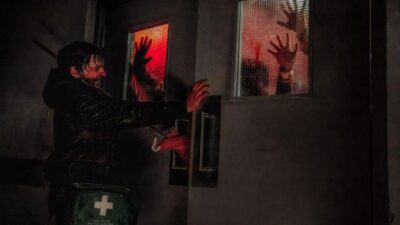
Continuing the trend of strong May horror, one of the year’s most anticipated indie releases, Curry Barker’s Obsession, establishes itself as an uncomfortable and psychologically tense horror film about
loneliness, insecurity, and the terrifying consequences of emotional desperation. The film opens with Bear openly discussing his feelings for his friend Nikki at a cafe and later during game night with friends, but his inability to actually express those feelings creates the emotional insecurity
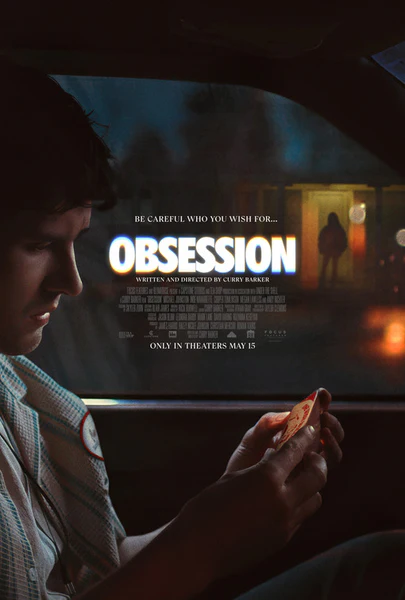
that drives the entire narrative forward. In a moment of frustration and emotional weakness, Bear uses a mysterious antique toy called the “One Wish Willow” to wish for Nikki to fall deeply in love with him, triggering an immediate, eerie shift in tone and character dynamics that persists for the remainder of the film. What initially presents itself as almost an awkward romantic setup slowly evolves into one of the creepiest and most emotionally uncomfortable theater experiences and horror films of the century, with Nikki’s growing obsession becoming increasingly disturbing as Bear realizes the consequences of his actions. We have a new scream queen in Inde Navarrette, and Obsession works because it fully commits to psychological discomfort, using sharp dialogue, escalating tension, disturbing dynamics, and calculated ambiguity to give this comedy-influencer-turned–horror director a debut that is deeply unsettling and lingers long after the film ends.
The narrative begins in a grounded and relatable way, following Bear’s awkward inability to confess his feelings to Nikki despite clearly being deeply in love with her. Early scenes at the cafe, game night, and social gatherings establish the relationship dynamic naturally between the four friends, building Bear’s emotional insecurity and frustration to the point of clear morality issues. The introduction of the “one wish” gimmick is what shifts the tone from uncomfortable romantic drama into psychological horror territory, while keeping the concept relatively simple; it’s a narrative that isn’t revolutionary, but revolutionized in its execution. Nikki’s immediate behavioral shift after the wish dominates the rest of the film with an eerie, cringey, creepy sense of inevitability, with the audience understanding almost certainly that Bear has made a catastrophic mistake and what he will have to do to fix it. The film smartly avoids turning Nikki into a full horror villain from the jump, it instead slowly escalates the obsessive things she is willing to do for Bear becoming more and more odd, invasive, emotionally disturbing, yet brilliant.
Bear functions both as a protagonist and arguably the antagonist at the same time as he is the emotional source of the horror, as the entire nightmare originates from his inability to honestly communicate his feelings naturally, it is a horror from shyness. His loneliness, insecurity, and desperation make him understandable enough to sympathize with initially, even as the audience quickly recognizes how desperate and selfish his wish actually becomes, making him an extremely complex lead. The film constantly leaves the audience morally conflicted regarding Bear, and his decisions, especially because his mistakes come from the emotional weakness he has rather than any outright malicious intent or greed. As Nikki becomes more obsessive and unstable, Bear slowly shifts from excited and complicit to fully terrified and regretful, emotionally and physically trapped by the consequences of his own actions. The character works particularly well because the film never fully lets him escape responsibility for what happens; it clearly lays out what he would need to do to end it, trapping the audience in a sense of inevitability and reinforcing the idea that his insecurity and desire for control will ultimately destroy both of their lives.
Moving on to Nikki, as her transformation throughout the film is masterful and the central source of horror, gradually evolving from affectionate and caring into deeply obsessive, manipulative, and one of the creepiest characters created in a long time. The progression of her behavior is handled slowly and carefully, allowing the relationship to become increasingly unsettling long before the film reaches outright violence and gore itself. The dialogue between Bear and Nikki is the film’s greatest strength, constantly balancing emotionally intimate but disingenuous exchanges with a shared sense of inevitability and eroding control on both sides. Nikki’s performance is stunningly strong, fully committed to the role while fluidly balancing moments of vulnerability, obsession, rage, and emotional instability throughout the story.
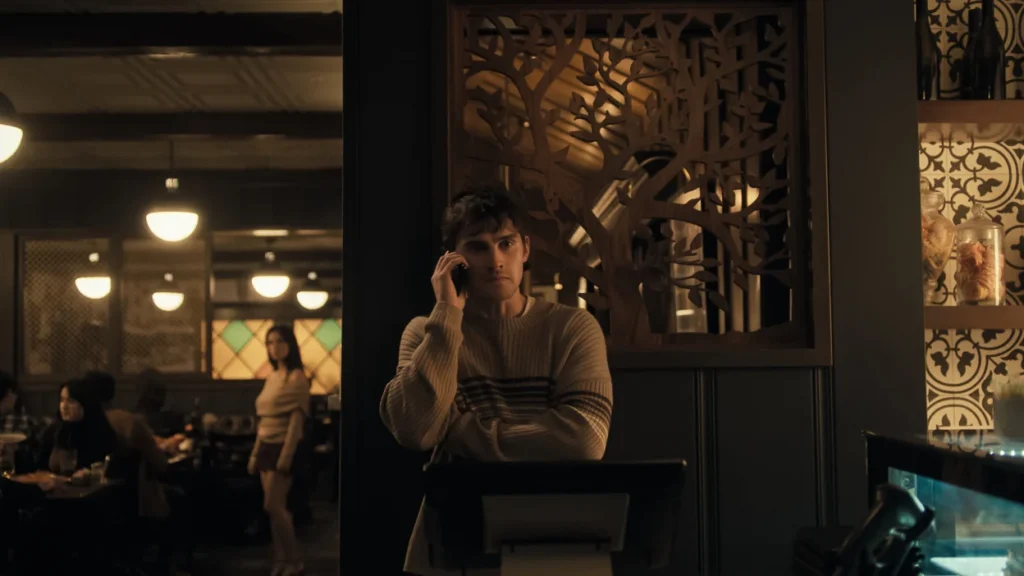
One of the film’s greatest strengths is how effectively it builds tension almost entirely through dialogue and emotional atmosphere rather than relying heavily on jumpscares or loud horror spectacle, as Barker says “the new jumpscare is making the audience point at the screen and say I didn’t like that.” Conversations between Bear and Nikki become progressively more uncomfortable as Nikki’s obsession escalates, creating a lingering sense that the situation is spiraling completely out of control even during quieter scenes. The narrative constantly teases the audience with the inevitability that Bear may eventually need to kill himself to undo the nightmare he himself created, an obvious final act destination that somehow still feels horrifying because of the path taken to get there. Even when the audience understands where the story may ultimately end, the film remains completely gripping because of how tense, creepy, emotionally exhausting, and awkward the journey itself becomes. It is one of the most uncomfortable theatrical experiences in years because the horror feels deeply personal and emotionally invasive rather than purely supernatural; the last time a theater felt this uneasy for me was Talk to Me, another internet-creator-to–horror-director transition that exploded onto the scene, a coincidence, or perhaps the sign of a new creative trend.
Obsession explores the idea that forced love immediately destroys the authenticity and emotional intimacy that makes relationships meaningful in the first place, turning affection into something horrifying rather than comforting. Bear technically gets exactly what he wished for, but the film quickly reveals that emotional control without free will becomes deeply disturbing and psychologically destructive for both people involved. The story constantly leaves morality slightly open to interpretation, particularly surrounding whether Nikki herself is truly the villain or if she is simply another victim trapped by Bear’s selfish emotional decision and inability to naturally express love. There are multiple moments where traces of the “real” Nikki seem to briefly return underneath the obsession, especially during scenes where she almost appears to beg Bear for help or release from what she has become. What makes the film so effective is that while Nikki becomes physically and emotionally terrifying, the audience never loses sight of the fact that Bear’s insecurity, loneliness, and desire for control created the horror in the first place, making the emotional conflict feel far more morally complex than a standard horror antagonist dynamic.
The final act of Obsession fully embraces psychological and physical horror as Nikki becomes increasingly violent, unstable, and emotionally terrifying while Bear desperately attempts to escape and undo the nightmare he created. The escalation into screaming confrontations, attacks, disturbing body horror, and emotionally chaotic violence feels genuinely horrifying because the film spent so much time carefully building the relationship tension beforehand. Nikki’s dialogue throughout the final act is terrifyingly effective, balancing obsession, emotional vulnerability, rage, and desperation all at once while making every interaction feel unpredictable and dangerous. Several scenes involving the mutilation and destruction of Bear’s friends are truly horrifying and masterfully executed, not simply because they are overly graphic, but because the emotional context surrounding them makes every act of violence feel tragic and avoidable. The horror payoff works so well because the audience fully understands the inevitability of the situation long before it happens, making the final act feel less like a twist and more like the emotional collapse of two people destroyed by insecurity, obsession, and a single selfish mistake.
Curry Barker’s direction is one of the film’s strongest overall elements, showing a clear understanding of how to build tension through pacing, emotional discomfort, and atmosphere rather than relying solely on genre cliches. The film’s quieter scenes often become its creepiest moments because of how realistically awkward and emotionally raw the conversations feel between characters. The atmosphere remains deeply uncomfortable for almost the entire runtime after the wish, creating a lingering sense of dread that hangs over even the calmer scenes. Barker’s style feels distinctly his own, rooted in the genre yet sharply defined by the confidence of his festival run, proving that while new directors can be hit or miss and independent films often experimental, he lands this one with exceptional control and a clear, emerging signature. The horror style feels heavily rooted in psychological unease and relationship toxicity rather than traditional monster or supernatural horror, making it feel far more personal and emotionally invasive. Barker establishes himself as an extremely promising horror director, crafting one of the year’s most emotionally disturbing and memorable horror experiences through restraint and tension alone.
Obsession stands out because it transforms a relatively simple supernatural concept into an emotionally devastating and psychologically terrifying relationship horror story. The film succeeds largely through its commitment to discomfort, forcing the audience to sit inside increasingly toxic emotional dynamics rather than offering easy moral clarity or relief. Bear and Mike’s relationship becomes horrifying specifically because it still feels emotionally recognizable underneath the supernatural elements, grounding the horror in insecurity, loneliness, and emotional dependency. The film delivers some of the creepiest emotional tension and psychological discomfort seen in recent horror, creating an experience that genuinely lingers long after the credits end. Obsession ultimately lands as not only one of the strongest horror films of the year so far, but also as one of the most emotionally uncomfortable and psychologically effective relationship horror films of the century, earning it an 88/100 from the TwilightRoom.
TwilightRoom Score: 88.1/100