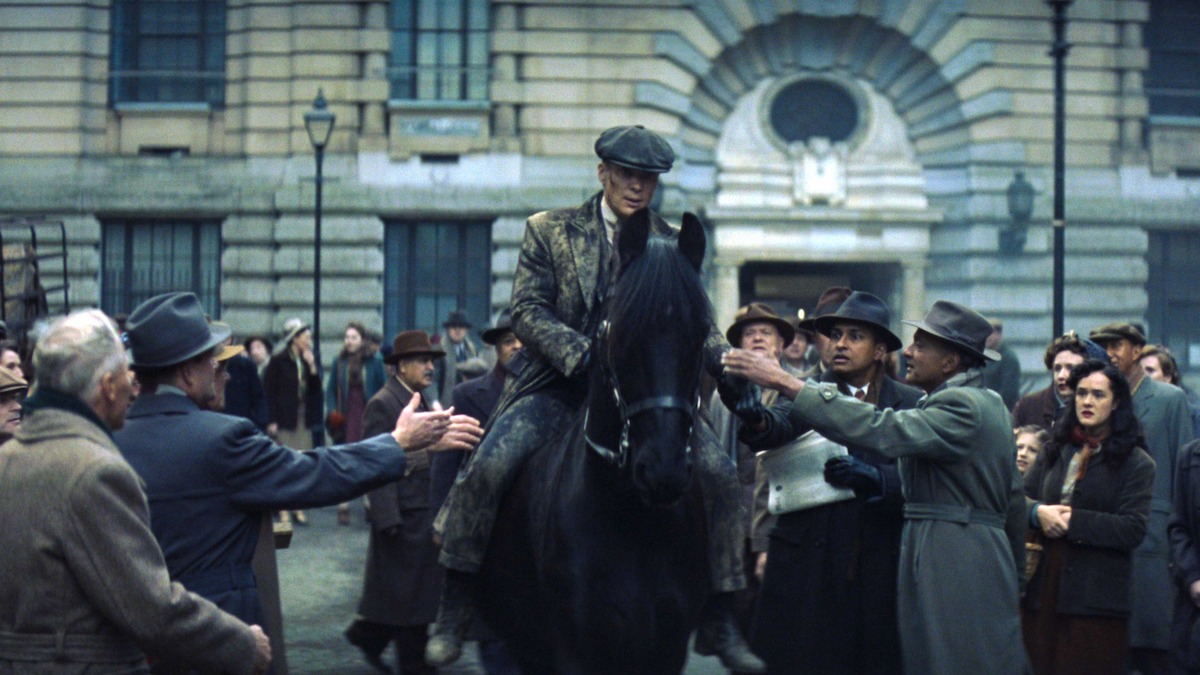
The film finale for one of the greatest franchises in television history released this past week, as the Peaky Blinders and Tommy Shelby return for the last time in Peaky Blinders: The Immortal Man on Netflix.
The Immortal Man is positioned as the long-awaited conclusion to Tommy Shelby’s story after the fantastic end to Season 6 three years earlier, finishing off one of the best written and iconic tv characters ever made.
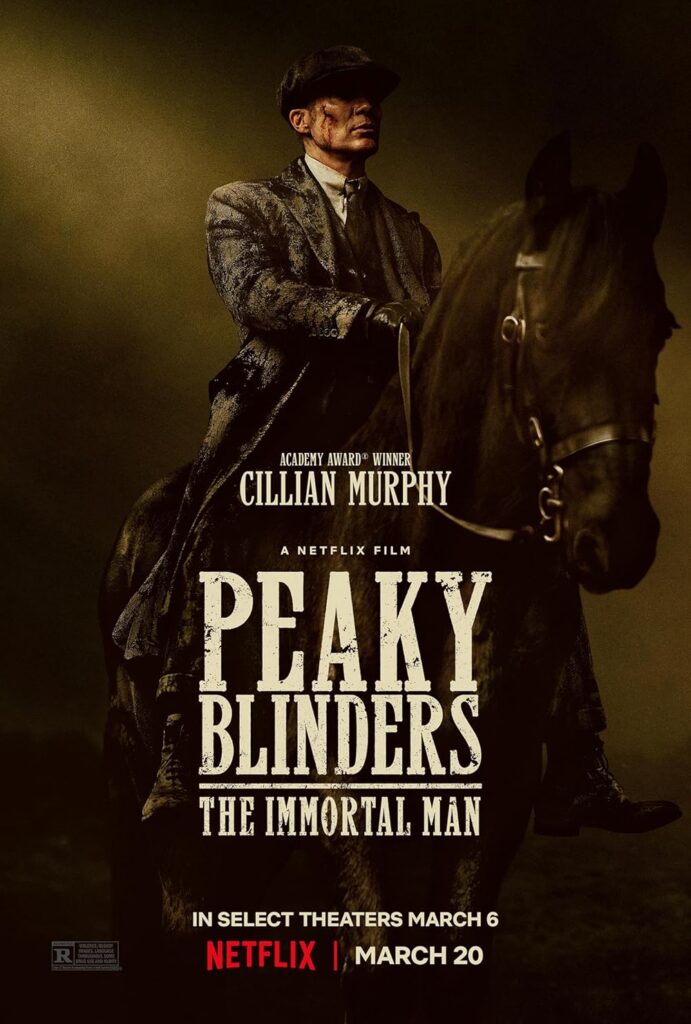
The film leans into what has been the defining aspect of the later seasons, the darker, more reflective tone of the older Tommy, as he reflects on his own legacy, the myth he has become, and the consequences for everything he has done and lost through the series. The film presents itself as both a continuation as well as an ending in a shockingly well-formatted way, that tries to balance the spectacle of a quality film with the introspection of the series as a whole. Peaky Blinder: The Immortal Man is a well-shot and emotionally grounded conclusion that delivers strong visuals and an end to a career-defining performance from Cillian Murphy, but ultimately lands as a more serviceable, solid entry, than a great one due to its uneven pacing and narrative execution.
Tommy, still reeling from the events of Season 6, now lives in self-imposed isolation, cut off from his old world and haunted by his past, the legend he has become, and the loneliness he created for himself. He is framed as a legend in the eye of the people, coining the name “ Gypsy King” rather than just a man, as he writes a final novel surrounding his believed curse to be the last of his family alive, “the only Shelby that didn’t want to live”. His sister Ada appears and attempts to pull him back into the fray, asking for his help corralling his estranged son Duke, as he is entering discussions with the Nazi’s leading to brutality and cruelty that does not represent the Shelby name. Tommy declines, with looming hatred for himself after the death of his brother Arthur, which is the inflection point of Tommy’s morals, used as a giant reveal later in the film.
Visually the film looks great, shot on a film-like camera that delivers strong landscape shots and consistent lighting that do a lot of the heavy lifting in setting the tone for the atmosphere of the finale early on, before the story picks up. There is a slight over-use of creative angles that occasionally make the film feel like it’s trying desperately to separate itself from other television sequel films, making the overall attempt at a beautiful cinematic experience one of the strongest elements but also one of its most mechanical and forced elements. Its struggles lie in the film’s early pacing, spending the first 45 minutes building very slowly and straining to find momentum with a group of characters audiences already know, lingering on setup for far too long. Tommy understandably so wants to live a life of solitary, but eventually re-engages with the narrative, but it just takes much too long to do so, making the film feel like it could have started 30 minutes into its runtime and feel the same.
What the beginning of the film does well, however, is its new character development of Shelby’s son Duke, who is a clearly unstable man who becomes the most interesting, but dangerous presence in the film. The lack of his father’s guidance, combined with the growing influence of the Nazi regime, becomes the most significant external threat to Duke’s decision-making and the main driver of the film’s plot. The central tension hinges on Duke’s loyalty, whether it belongs to Tommy or to the power and money he craves to prove his worth, ultimately determining whether Tommy’s final endeavor succeeds or spectacularly blows up in his face. Tommy writes in his book that he is aware of the danger and chooses to put faith in the idea that “something good can come of all of this bad.”
The film finally finds its footing and injects real tension into the plot when Tommy’s last remaining sibling, Ada, is killed, giving him the motive to fully reclaim his power and hunt down the man responsible for her death. Duke’s failure to protect Ada becomes the catalyst for his realization that he must choose his family over the pursuit of money, an essential turning point that injects the story with real urgency and emotional weight, effectively saving the film and transforming it into something genuinely worthy of the show’s fans’ time. Once Tommy returns to Birmingham, the film noticeably improves, its pacing tightens, the score returns to some of its most classic songs from the series, and it feels like the more true continuation of the series that it needed to be instead of a full standalone piece. Duke and Tommy work hand-in-hand while weaving in references and moments that connect to past characters from the series that feel as fun for returners as they are important to the development of the plot.
The film’s final act centers on the kind of meticulously plotted schemes and muscular action sequences from Shelby that define the franchise, all executed with precise timing and striking, genuinely enticing visuals. The score and carefully sustained tension in these moments elevate the film’s climax, giving Tommy a fitting final monologue and the chance to pass his crown to Duke, definitively closing his arc. His death is emotional and impactful, honoring the character and providing the kind of ending the story needed for its overarching concept to land with a fully realized, deeply felt resolution.
Overall, Peaky Blinders is a series carried by exceptional performances, led by Cillian Murphy, who delivers one of the strongest character performances in recent television and now film history. The Immortal Man succeeds in giving Tommy Shelby the proper ending, its visuals, tone and performances with new and returning characters remain consistently strong. While the early pacing and uneven narrative keep it from greatness, it ultimately serves as a good, satisfying conclusion that Murphy elevates beyond the script itself, earning an 82/100 from The TwilightRoom.
Twilight Room Score: 82.6/100