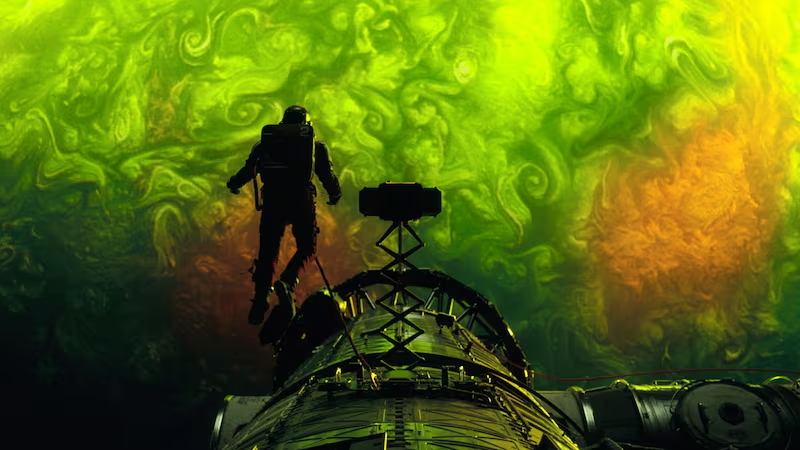
The new Prime Video theatrical release, Project Hail Mary, positions itself as a large-scale sci-fi blockbuster adapted from a popular novel, yet anchored by a deeply personal and emotional core, led by Ryan Gosling in the starring role.
The film blends its high-concept science fiction designed and written by Andy Weir’s novel with the grounded character work and humor delivered by Gosling in a way that may have just delivered more of a unique cinematic event than just the simple March blockbuster expectation.
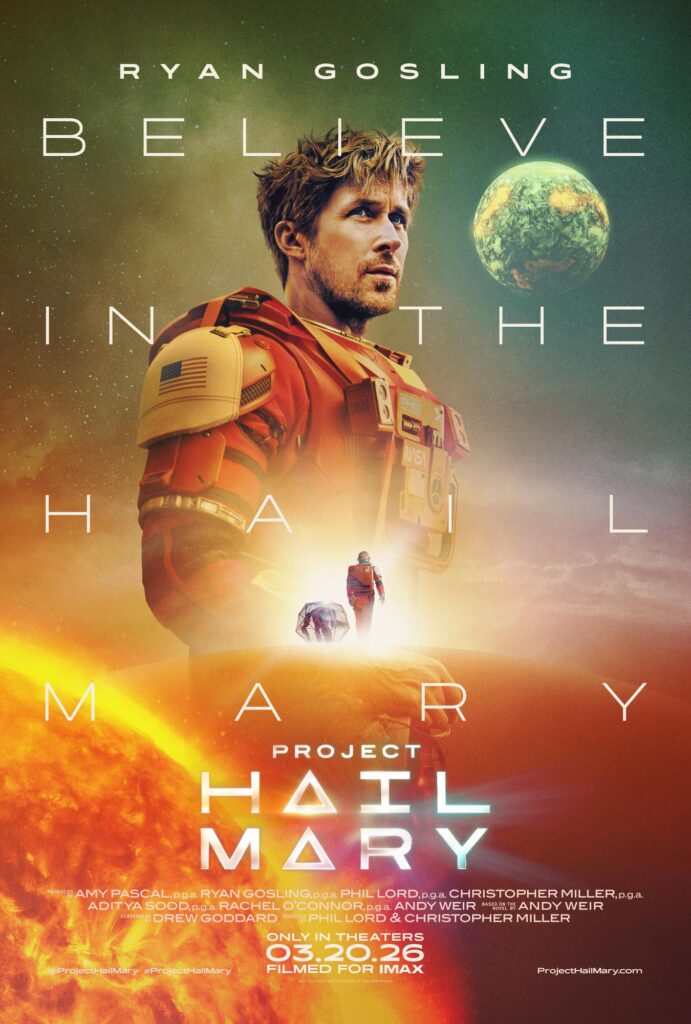
It’s been a while since a theatrical experience has delivered the kind of jaw-dropping, emotional rush that this one does, as it balances its heavily promoted spectacle with sharp comedic timing and character-driven storytelling that carves out a unique identity within one of the genre’s most overused tropes. Project Hail Mary is an expansive, comedic, and emotionally impactful sci-fi blockbuster that through its story, visuals, and standout performance from Ryan Gosling established itself as one of the best films of the 21st century and a defining entry into the modern landscape of film.
The film follows Ryland Grace, a middle school science teacher who wakes up alone on a spaceship with no memory, light years from earth. As the story unfolds, we as an audience see not only how he copes with the loneliness of space, but also slowly, with Grace, find out the events on Earth that got him to the spot he is in. Earth is facing extinction, as a life form called Astrophage is slowly consuming the sun and lowering the temperature of the earth, forcing Grace to help with an on-earth mission to discover why and how to stop the event from occurring. The narrative from this point unfolds through a mix of present survival in space and past memory and backstory, in a way that could have been ineffective like many other films, but works seamlessly here.
The Story, written by Andy Weir, is already established as one of the best modern sci-fi concepts, and the success of his other work, The Martian paves the way for yet another success here, but this film feels like more than that, post-watch. Its an adaptation that handles the media transfer extremely well, maintaining the intelligence and nerdy aspects of the writing and the clarity of the source material while adding the voice of one of the biggest names in Hollywood in the most respectful way I have seen in a long time. The screenplay is structured in a way that makes the complex scientific roots accessible and engaging, taking the same writer from The Martian and building off a successful groundwork that delivered. The connection between page and screen feels genuinely heartfelt here; if the novel’s words created the audience, the film’s visuals and theatrical experience explode that foundation into something approaching a magnum opus.
Hail Mary stands out for its ability to thread comedy through a high-stakes space mission and a world on the brink. Humor is designed naturally through Gosling’s portrayal of Grace’s character and reactions, rather than forced moments, it’s a way to cope with the loneliness of floating through the abyss. Once his pal Rocky is introduced the comedy is used even further to balance the emotional weight the two go through and keeps the film engaging throughout, managing the emotions of the audience perfectly. The tone allows the film to find its own voice as an entertaining blockbuster that is equally meaningful.
Perhaps the biggest expectation from the film going in was that the visuals were going to, in the words of Rocky, “amaze” its audience, and they deliver with stunning combination of the score to make the big screen experience an unforgettable screening. The film creates moments that are both awe inspiring throughout, and emotionally impactful, mixing the plot with the beautiful planet design and infrared astrophage lighting to make the audience feel what they need to feel. The scale of space is rendered with impressive scope while the film keeps its focus tightly on the two central characters, repeatedly creating inflection points for them and the audience alike. The vast, meticulously realized cosmic landscape makes for a truly jaw-dropping visual design.
With immaculate audio-visual design and a sharply written script, the film’s greatest strength is still the relationship between Grace and Rocky, the alien he encounters on his journey, which anchors its emotional core. As the two gradually learn to communicate, their bond and onscreen chemistry emerge as both almost unbelievable in concept and yet the most authentic element in the entire film. The partnership is one that speaks of being lonely and what it means to care for each other, its not a complex commentary but its exactly what it needs to be, it elevates a standard survival story into a heartfelt buddy comedy that has won me and much of its audience over.
The structure of the film moves back in forth between past and present as we find out exactly how Grace ends up on this ship where he meets Rocky, using flashbacks that effectively outline the decisions Grace makes in the present with the context established from the past. Its a wise way of keeping the mystery alive of who Grace represents as a character, where Gosling is able to reveal key information about the complexities of sacrifice through his action before his past words, actions and the present define his bravery. The pacing is one that gets criticized in many films constantly jumping back and forth, but here allows for the discovery process to feel earned and engaging and provide a unique and attention-pleasing route to the final act of the film. The relationship between Eva, the lead director of the Project Hail Mary mission, and Ryland Grace stands in sharp contrast to his bond with Rocky, adding another crucial layer of emotional and thematic complexity to the story. It highlights a very humanistic connection that leads to a betrayal which, while necessary, directly informs decisions made later in the film. This bond back on Earth becomes the catalyst for both the film’s resolution and the fate of the world, placing reluctant trust in a once-unassuming teacher and burdening him with a responsibility he never believed he possessed.
SPOILERS SKIP THIS PARAGRAPH IF YOU CHOOSE:
It’s a perfect emotional bridge into the film’s ending, where Grace chooses to save Earth but then abandons the return journey to go back for Rocky instead. The entire Earth-side story builds to this choice, with his loneliness weaponized as leverage for the mission, and the finale beautifully honoring Grace’s arc and the relationships he forges along the way. It is the kind of ending rarely seen in studio sci-fi, one that feels both profoundly satisfying and organically earned, as he becomes a teacher on Rocky’s home world rather than his own, living out his life with the only being in the universe who truly ended his isolation, someone he would die for as readily as they would die for him.
– END OF SPOILERS –
Overall, Project Hail Mary has the scale, visual ambition, and budget of a blockbuster while maintaining a far stronger focus on character and storytelling than most of its peers. It stands out through its precise technical execution, genuine emotional depth, and a disarmingly down-to-earth friendship that could not be set farther from Earth’s surface. Ryan Gosling delivers a career-defining performance, anchoring what feels like one of this century’s magnum opuses in the sci-fi genre. Ultimately, it becomes more than just a genre triumph or a successful adaptation, emerging as one of the decade’s standout films on nearly every front and earning a 97/100 from The Twilight Room.
Twilight Room Score: 97.3/10