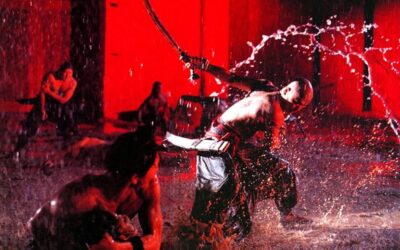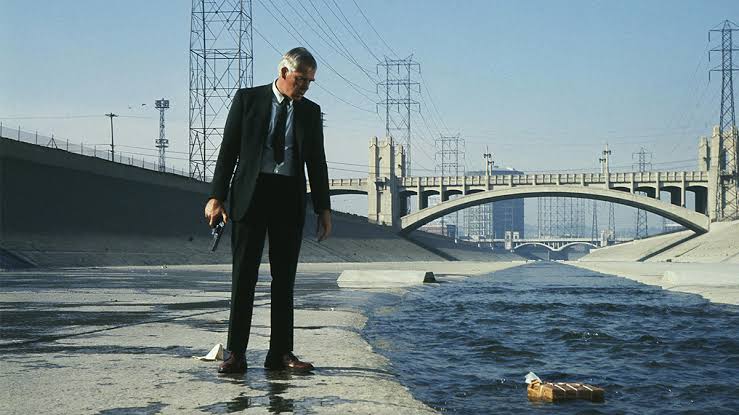
Our first Criterion Tuesday of August is John Boorman’s classic Point Blank, as it opens in a dark Los Angeles bathed in heavy crime-gangster vibes, full of blues,
dropping the audience straight into a prison break that sets the tone for everything technically brilliant to follow. The film stars Angie Dickinson and, most importantly, the legendary Lee Marvin, with Marvin’s Walker swimming his way out of Alcatraz before the story flashes to the present, where the same man is now taking a tour of the very prison he escaped, before picking up his namesake
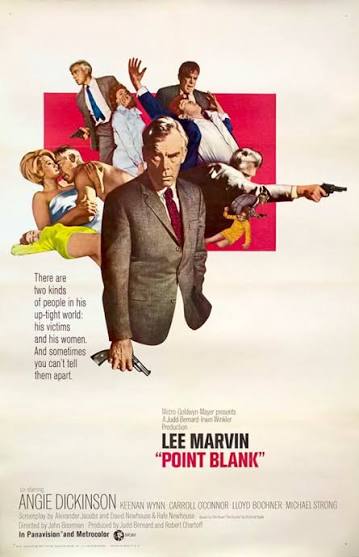
for the rest of the film: walking. Point Blank was John Boorman’s first color film, and it still stands as a remarkable achievement that is almost unbelievable in its design, a director who understood the medium in his first attempt as well as any crime-thriller filmmaker ever has. The film delivers like a colorful painting of technical brilliance, using a color-noir style that feels like a barebones thriller dressed in something far more painterly and deliberate. Point Blank is an ordinary crime thriller that was successful in America but heralded as an outright masterpiece in France, a divide that would only converge into an overall positive opinion as time passed, underscoring how ahead of its time Boorman’s style really was, even as modern filmmakers never fully embraced his expertise.
The film pits Marvin’s Walker, who coolly struts through the streets of LA, against the Organization itself, all in pursuit of the money he’s owed after being betrayed and left for dead by the very partner who should have had his back. That premise sends him up against a level of crime far more organized and entrenched than the low-level heist that started everything, and the film wastes no time establishing just how outmatched he appears to be walking in. The structure bounces between the Alcatraz flashback and the present-day pursuit, a device that keeps Walker’s motivation crystal clear even as the plot itself stays deliberately fragmented, elliptical, and at times disorienting by design. The film is bursting with color and style throughout, using quick cuts and mounting intensity that lean electrically into the thriller-crime genre rather than settling for playing it straight. Walker is smarter than he first appears, and his dynamic with Angie Dickinson’s character is handled with real nuance, giving the film’s coldest, most clinical stretches a genuine current of feeling underneath.
The use of camera here is consistently creative, leaning on POV shots and razor-sharp editing control that feels remarkably assured for a filmmaker working in color for the very first time. The score matches that same creative instinct, reinforcing the film’s clipped, propulsive rhythm rather than sitting quietly in the background the way so many crime scores of the era did. The use of color throughout is thoughtful in a way that makes full compositions cohere rather than distract, every frame feeling considered rather than merely decorative, painterly in a way that never once sacrifices tension. Boorman’s color-noir sensibility gives the film the feel of a barebones thriller elevated into something far more painterly and deliberate, a tension between grit and style that comes to define the movie’s entire identity. That balance is exactly why the film reads as a technical showcase as much as a narrative one, a director proving in his very first color outing that he understood exactly what the medium could do for a genre built so heavily on shadow.
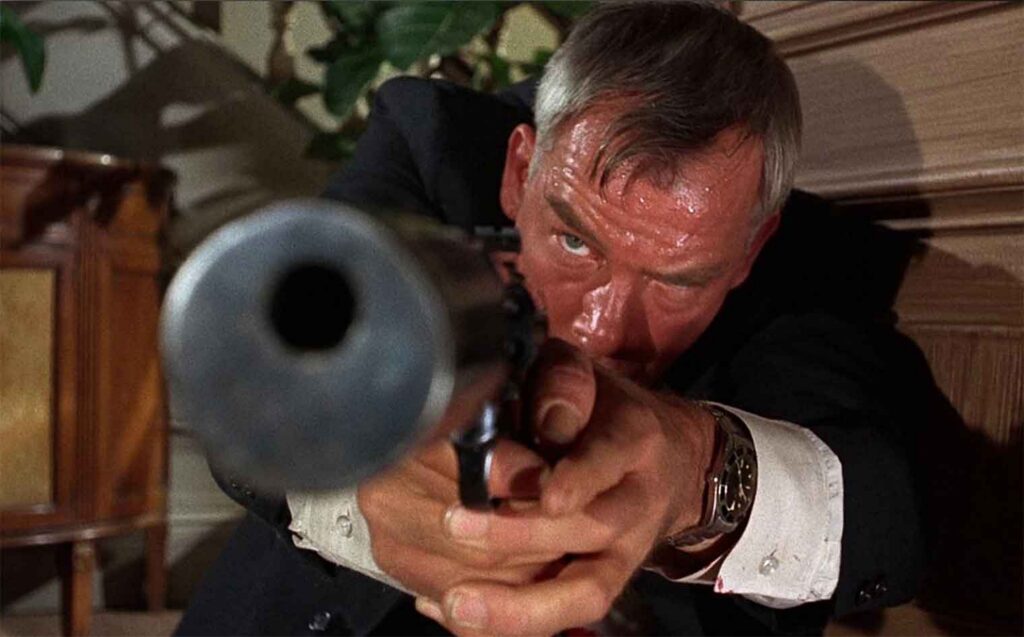
The film is based on the novel The Hunter by Richard Stark, itself a pseudonym for Donald E. Westlake, a detail that adds another sly layer of reinvention to a story already obsessed with identity and reinvention at every turn. The book was later republished as Payback to coincide with the Mel Gibson film adaptation, tying Point Blank’s source material to two very different big-screen interpretations released decades apart. Boorman changed the protagonist’s name from Parker to Walker to better suit what he was trying to accomplish tonally, a small but telling shift given how much of the film’s identity rests on its lead simply moving forward, relentlessly, toward what he’s owed. The result is a film directly focused on Walker, played by Marvin plays Walker with deadpan, unshakable determination, chasing his money with a single-mindedness that borders on the mythic, the same focus that’s made Point Blank endure as a cult favorite, a lean, stylish thriller that rewards rewatching as much for craft as for story.
Point Blank never loses sight of Walker’s singular goal even as the narrative fractures around him, using that structural looseness to mirror his own disorientation rather than treating it as a mere gimmick. The film’s confidence in its own visual language — the color, the editing, the score — means it rarely needs dialogue to carry a scene, trusting composition and rhythm to do that work instead. Dickinson’s performance gives the film an emotional anchor that keeps Walker’s cold pursuit from feeling like empty style, grounding the movie’s more experimental choices in something recognizably human. The Alcatraz-to-present structure pays off fully by the film’s back half, turning what could have been a simple revenge plot into something more meditative on obsession, identity, and reinvention. Even decades later, the film’s technical ambition holds up as a genuine high point of the genre, a movie every bit as interested in how it tells its story as in the story itself.
Point Blank remains a defining example of what a director working in total command of a new medium can accomplish, with Boorman’s first color film standing as a genuine, almost unbelievable achievement in the crime-thriller genre. Lee Marvin’s Walker, chasing his money with deadpan, unshakable determination through the streets of LA, is one of the era’s most compelling antiheroes, born from a script that renamed him from the novel’s Parker after the author refused to license that name outside a film series. The film’s color-noir style, POV camerawork, and thoughtfully composed frames make it a technical showcase as much as a narrative one, bursting with an intensity that still feels sharp and vital today. Its legacy is a fitting one for a film so obsessed with reinvention: a novel republished under a new title, a hero renamed to fit the vision, and a movie that was heralded as a masterpiece in France well before American audiences and modern filmmakers came around to Boorman’s expertise. Point Blank endures as a Criterion-worthy classic precisely because its style never once overwhelms its substance, a film that looks as good as it moves, earning it a rating of 80/10 from TwilightRoom.
TwilightRoom Score 80.0/100