This week’s Throwback Thursday review dives into one of the most ridiculous and unintentionally legendary studio action films of the 2000s. Snakes on a Plane
became far more iconic through internet culture, memes, and sheer absurdity than through any kind of critical acclaim. The film opens with a classic Hawaiian-inspired music piece and immediately throws audiences into a chaotic crime setup involving a witness being hunted after seeing a brutal mob murder. The film wastes almost no time getting its massive, impressively stacked

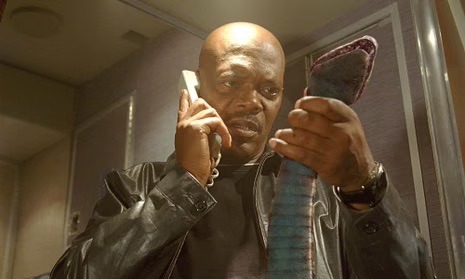
ensemble cast onto the airplane before turning the entire setting into a full‑blown serpentine disaster spectacle. Samuel L. Jackson’s Agent Neville Flynn instantly established the film’s tone: overly serious performances trapped inside one of the dumbest blockbuster premises imaginable, and that was exactly what the appeal was here. Snakes on a Plane works largely because it fully commits to its own absurdity, transforming awful dialogue, over‑the‑top deaths, and nonstop chaos into a genuinely entertaining piece of camp action cinema. It may lack real substance, but that hasn’t stopped it from becoming a certified cult‑meme classic.
The narrative itself is hilariously simple and absurd, following Sean Jones after he witnesses a brutal mob murder and becomes the key witness against a powerful crime boss, forcing Agent Neville Flynn to escort him across the ocean safely before he can be assassinated. The first act rapidly introduces nearly every major passenger before the plane even fully settles into the air, creating this giant ensemble of strangers that eventually become trapped together once the snakes are released onboard. Once turbulence begins and the lights start flickering, the film quickly abandons any attempt at realism as hundreds of deadly snakes flood through the vents and cargo areas, immediately turning every section of the airplane into complete panic and survival chaos. The confined airplane setting actually works surprisingly well for tension because there is literally nowhere for the passengers to escape once things begin spiraling completely out of control. While the premise itself is objectively one of the dumbest concepts ever greenlit for a blockbuster, the film smartly understands that audiences are here for spectacle, chaos, and giant snakes attacking people in increasingly absurd ways rather than nuanced storytelling or grounded logic.
The tone constantly balances itself somewhere between genuine disaster thriller and complete self-aware camp insanity, often switching between suspense and unintentional comedy within the exact same scene. Dialogue throughout the film is frequently awful and unbelievably cheesy, but somehow that becomes part of the appeal rather than the downfall, especially once Samuel L. Jackson fully commits to the material with complete seriousness. Scenes involving giant snakes, wildly exaggerated reactions, and over‑the‑top attacks feel much closer to meme cinema than to grounded action filmmaking, but that unwavering commitment to excess is exactly why the movie has endured in pop culture for so long. The ensemble cast also helps elevate the material more than expected, with characters like Claire Miller and the flight crew gradually becoming temporary leaders as panic spreads across the aircraft while side characters and comic relief personalities keep pushing the movie further into camp territory. Snakes on a Plane almost plays like a throwback B-movie creature feature given a giant Hollywood budget, where every ridiculous creative choice somehow circles back around into becoming genuinely entertaining because the film never apologizes for how absurd it is.
As the survivors attempt to regain control of the plane, the film leans even harder into disaster spectacle with nonstop snake attacks, cockpit struggles, emergency landings, and increasingly chaotic attempts to survive long enough to safely land the aircraft. Several sequences genuinely succeed as suspense scenes despite the ridiculous concept, especially once panic completely overtakes the passengers and the flight crew realizes nowhere on the plane is actually safe anymore. The film constantly relies on exaggerated reactions, loud chaos, and nonstop movement to maintain energy, even when logic completely disappears, creating an experience that feels closer to a late-night cult action movie than a polished studio thriller. Beneath all the insanity, the movie loosely explores survival and leadership through Agent Flynn, who constantly tries organizing terrified strangers into working together while the confined airplane setting creates this temporary survival society in the middle of complete disaster. Written by John Heffernan and directed by Hong Kong action stylist Ronny Yu, Snakes on a Plane became one of the first true internet “meme movies,” its legacy driven less by reviews than by its online life. Its instantly iconic title and outrageously simple premise generated massive early web buzz and anticipation, long before the film actually hit theaters. Even today, the film remains remembered far more for its camp legacy, internet culture impact, and collective audience experience than for traditional blockbuster quality, cementing itself as one of the defining cult-action movies of the 2000s.
Once the turbulence begins and the lights go out, the film rapidly shifts from action-thriller setup into full-blown survival disaster mode. Hundreds of snakes flood through the airplane vents and cargo areas, immediately turning every section of the plan into danger. The film smartly uses the confined environment to create escalating panic as passengers realize nowhere on the aircraft is safe anymore. Every few minutes it introduces another ridiculous snake attack or chaotic death sequences, constantly increasing the absurdity level. The structure of the film feels almost episodic at points, jumping between passengers trying to survive, different emotional and romantic action beats, and comedic relief moments from characters specifically designed to make you laugh.

The action and suspense sequences continue escalating as more passengers begin grouping together trying to survive the complete disaster unfolding around them. A snake expert is eventually called in and bizarre theories involving pheromones and controlling the snakes only make the movie feel even more ridiculous, but somehow still entertaining within the film’s absurd tone. Once the pilots become compromised and the plane itself begins losing control, characters like Claire Miller and Agent Flynn are forced into leadership roles while panic spreads across every section of the aircraft. The movie constantly bounces between suspense, action, comedy, and complete nonsense, creating this almost chaotic tonal experience that somehow works because the film commits fully to its insanity. Even when dialogue becomes awful or scenes become unintentionally hilarious, the nonstop pacing and ridiculous set pieces keep the movie entertaining from beginning to end.
What makes Snakes on a Plane so memorable compared to other mid-2000s action-thrillers is how fully it embraced becoming a cultural meme phenomenon before and after release. Samuel L. Jackson’s performance completely understands the assignment, delivering every ridiculous line with full seriousness as if he were starring in a grounded action masterpiece instead of a movie about venomous snakes taking over an airplane. Directed by Hong Kong action filmmaker Ronny Yu and produced during a strange era for airplane-centered blockbusters following 9/11, the film eventually leaned into its internet popularity and absurd premise rather than trying to make itself more realistic or respectable. The massive ensemble cast, nonstop chaos, and increasingly exaggerated deaths helped turn the movie into one of the first truly internet-driven cult blockbusters of the modern era. Over time, Snakes on a Plane became remembered less as an actual thriller and more as a complete audience experience: the type of movie designed to be laughed at, quoted, memed, and enjoyed collectively with a crowd.
The film’s final act becomes pure disaster spectacle as the surviving passengers desperately attempt to land the plane while snakes continue overtaking nearly every remaining safe area onboard. Chaos completely takes over the aircraft as characters are picked off in increasingly absurd ways while Agent Flynn and the remaining survivors try holding everything together long enough to survive. The movie never attempts to suddenly become emotionally deep or grounded during its climax, instead fully committing to giant camp action energy, ridiculous one-liners, and over-the-top survival heroics. While the premise itself remains undeniably stupid, that commitment to excess is exactly why the movie has lasted culturally far longer than many more serious action thrillers released around the same time. Snakes on a Plane ultimately succeeds not because it is well‑written or represents sophisticated filmmaking, but because it fully understands how entertaining unapologetic chaos, camp spectacle, and self‑aware absurdity can be when audiences agree to buy into the ride.
Snakes on a Plane is absolutely ridiculous from beginning to end, but that exact absurdity is ultimately what makes it memorable and entertaining nearly two decades later. The film fully understands the kind of movie it wants to be and rarely apologizes for its over-the-top violence, goofy humor, terrible dialogue, and camp spectacle. Samuel L. Jackson’s commitment to this whole bit, the wild ensemble cast energy, and the nonstop disaster pacing help elevate what could have been completely unwatchable material. While the film is far from a genuinely great action or horror film by any means, its succeeds as a fun throwback watch, a chaotic late-night throwback creature feature that audiences can laugh with and enjoy collectively. Snakes on a Plan remains one of the defining cult-action movies of the 2000s, and hate or love the chaos it proves sometimes a dumb premise fully committed to wild absurdity can become more entertaining than a far more serious blockbuster, earning it a 73/100 from the TwilightRoom.
Twilight Room Score: 73.5/100