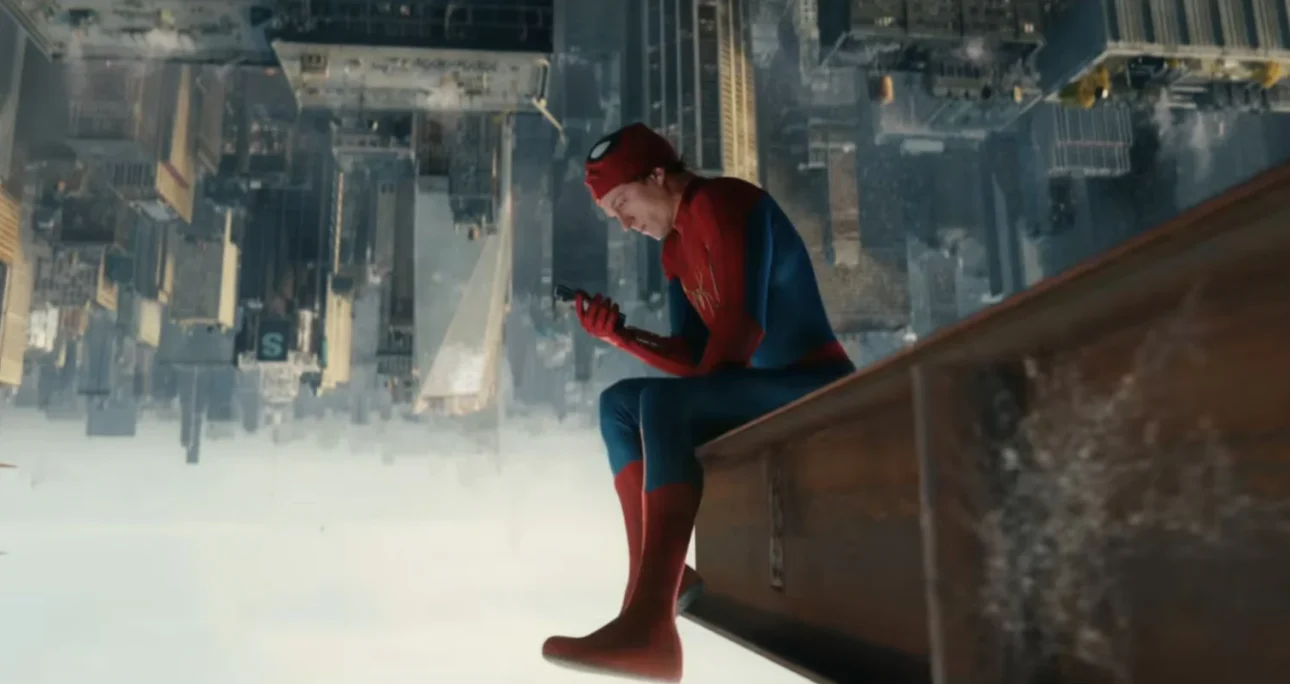
Spider-Man: Brand New Day delivers the best Spider-Man film since the 2002 original, echoing Spider-Man 2 while also feeling closer to an origin story for this
particular Tom Holland universe at exactly the right time — one where Peter finally arrives at an understanding of who he truly is. The film handles its story in ways many fans neither expected nor hoped for, which may sound daunting or concerning at first, but that departure from the expected is precisely what makes the

movie work so well. The cinematography here represents the most noticeable leap of any recent Spider-Man or MCU film, giving Brand New Day a new visual identity that, while not groundbreaking, clearly has care behind it, enough that the changes are impossible to miss from the opening stretch onward. Tom Holland was great in The Odyssey, despite the skeptics, but he delivers the best performance of his film career here, and in doing so makes a real claim to being the definitive Spider-Man, with what may now be the second-best live-action entry of all time. Spider-Man: Brand New Day means more than spectacle and entertainment. For Holland and for Spider-Man fans alike, it finally connects to what the character has needed most desperately for years: a Spider-Man learning, painfully, that he shouldn’t go at this alone.
The film picks up exactly where its monumental predecessor left off, with Peter now singularly focused on simply being Spider-Man for the next few years, and New York—his city—looks visibly different from other MCU entries, immediately missing that sense of space from the first frames. That opening stretch includes a years-long montage of Peter watching his friends’ lives unfold at MIT without him, an immediately emotional gut punch that establishes the depth of his isolation before the plot machinery even starts turning. His sadness and loneliness never plays as performative or overly written, he is truly alone, not in a way the film underlines for effect, but in a way that sits deeply, quietly internal, coloring nearly every scene he’s in, it’s impactful and noticeable. That grief directly bleeds into his abilities, with his loss and emotion mutating alongside his powers and pushing mutation, in every sense of the Marvel world, to the forefront. It’s a genuinely novel wrinkle for a character whose powers have rarely been tied this explicitly to his psychology since Spider-Man 2. Even the city itself becomes a source of instability rather than comfort, as New York’s lonely-but-surrounded way of life overwhelms his heightened senses and reframes his own home turf as yet another burden he’s carrying entirely by himself.
The new villain’s power, the ability to transfer consciousness into other people, is an immediately compelling hook, something we have yet to see, giving the film a threat that operates on a psychological register where Spider-Man villains have always been effective. That premise deepens considerably once the villain is confirmed to be Sadie Sink’s character, a version of Jean Grey that was heavily speculated, making the reveal land with genuine weight rather than feeling like a stunt-cast surprise. The inhibitor tech at the center of the plot, which Peter creates with advice from Dr. Banner and help from MJ, becomes even more consequential once it’s shown to work on mutants newly entering the MCU as well as on Peter himself, making it universal and tying the film’s central device directly into the antagonist’s arc. The emotional stakes sharpen when MJ learns the truth about Peter and their past and doesn’t reciprocate his feelings, breaking him in a way that feels tragic and real, even if it ultimately sets the stage for the start of a rekindling. But the film doesn’t dwell on it for long, as it’s revealed that Damage Control is not what they appear and has lied, reframing Jean Grey as not the villain but a girl who can painfully relate to Peter more than anyone else in the film. Peter’s own grip on his powers and emotions begins slipping in tandem, and the film lets his abilities run raw and unfiltered in a way that gives the back half a genuinely dangerous, unpredictable, and soul-searching charge.
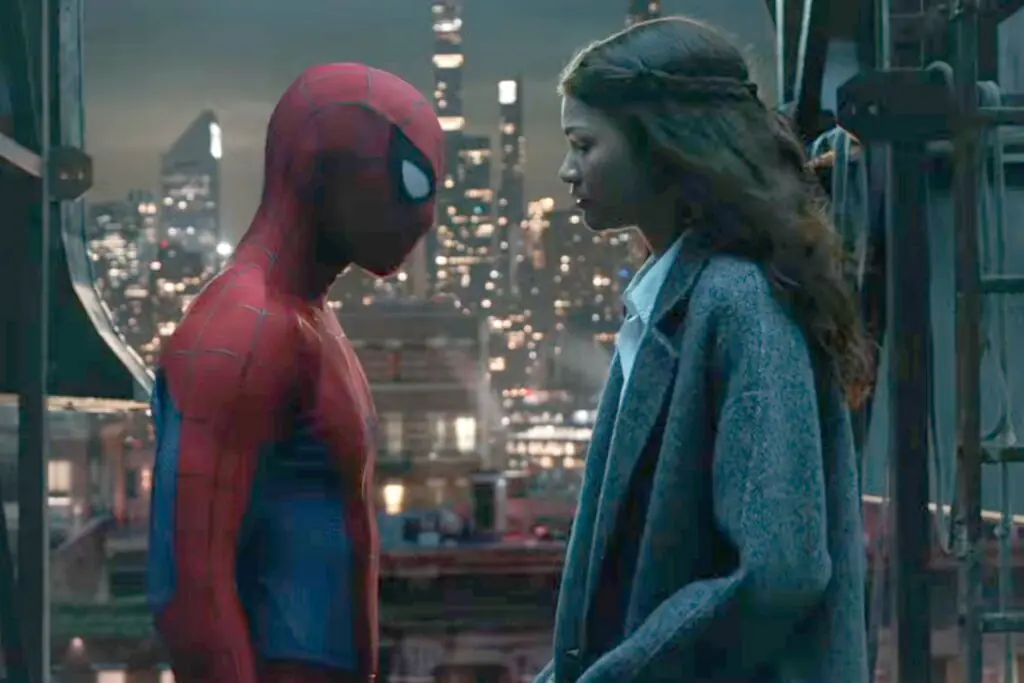
The film’s visual departure from its MCU siblings pays off across the runtime, and while the shift isn’t groundbreaking on its own terms, there’s clearly real care behind it, enough that the change is impossible to miss from the opening stretch onward. The inhibitor tech at the center of the film is built with real texture rather than as a convenient gadget, with Peter constructing it on Bruce Banner’s advice and with MJ’s direct help, a detail that grounds the film’s central device in relationships rather than pure invention. The web-swinging chase sequence through New York, now with Punisher along for the ride as an unlikely ally, is a genuine highlight, injecting a jolt of energy that feels refreshing rather than recycled after so many MCU chase beats, and the set piece pitting Jean Grey and Hulk against Punisher and Spider-Man is a standout, delivering exactly the kind of unexpected pairing the marketing only hinted at. No cameo in the film — including Yelena’s surprise turn — ever feels forced, with each one folded meaningfully into the plot instead of existing purely for a pop, and the quieter scene of MJ helping Peter fix the inhibitor stands out as some of the best writing in the film, a well-shot, genuinely intimate moment that also becomes the vehicle for the two of them finally relating to each other honestly, offering a new look at what the MCU is capable of when it slows down.
The emotional gut-punch of MJ learning the truth about her and Peter’s past and not reciprocating his feelings hits hard and breaks him in a way that feels earned rather than manufactured, but the film wisely doesn’t dwell in that wreckage for long. Instead it pivots into something warmer, as Ned and Spidey finally get to hang out for the first time in a long while, marking the start of a real rekindling between the three of them even as the romantic thread stays severed. That rekindling deepens once it’s revealed Damage Control isn’t what it appears and has been lying all along, a twist that reframes Jean Grey entirely — not as the villain the film spent its first half suggesting, but as a girl who understands Peter’s pain more intimately than anyone else in his life. The three-way dynamic between MJ, Punisher, and Spider-Man balances loss, trauma, and comedy with real precision from here on, never letting any single tone swallow the others, even as Peter’s own grip on his powers and emotions keeps slipping in tandem with the story’s stakes. The film’s climax and ending mark its weakest stretch, not because they needed to swing in a wildly different direction, but because Spider-Man endings built on this particular flavor of grief and catharsis have become so familiar they risk feeling like clockwork — though the quiet closing image of Peter and Ned sitting together, and Peter looking out over New York, still earns its sentiment despite the familiarity of the formula around it.
Brand New Day earns its place as the best Spider-Man film since 2002, echoing Spider-Man 2 in spirit while carving out a genuinely distinct identity as an origin story for this version of Peter Parker. The film’s willingness to zig where audiences expected a zag, handling grief, isolation, and power in ways fans didn’t necessarily ask for, is exactly what elevated it above a standard franchise sequel. Tom Holland’s performance here surpasses even his work in The Odyssey, further cementing his case as delivering the best live-action Spider-Man of all time on the big screen. Beyond the craft on display, the film carries real personal weight and entertainment throughout, finally giving fans the Spider-Man story they’ve needed for years: one about a hero learning he doesn’t have to carry everything himself. Spider-Man: Brand New Day opens a new world for the character on a strong note, stumbling only in its overly familiar climax and ending while remaining transcendent nearly everywhere else, earning an 89/100 from TwilightRoom and a place among the top five films of the year so far.
TwilightRoom Score: 89.2/100