The Dog Stars arrived under a shadow of uncertainty, a stacked cast and a proven director undercut by an almost total lack of promotion plus a virus-apocalypse
premise that seemed set up to flatten what could have been sharp commentary into something simpler. That quiet going into release was reason enough for concern. But the film itself surprises: a flawed, tantalizing entry that lands as one of the more solid additions to Scott’s filmography, landing far more positive than the pre-release silence suggested. But the film itself genuinely surprised me as a solid entry into Scott’s filmography, a flawed but tantalizing film I left far more positive on than I expected. Ridley Scott’s decision to build a modern-day apocalypse novel adaptation surrounding a virus, sounds familiar, is compelling on paper, though he never quite commits to that premise or timely
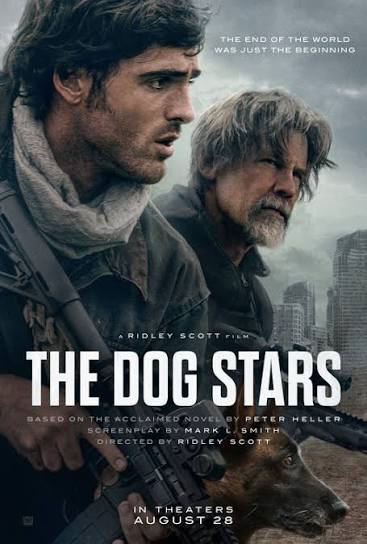
moment of commentary as I would have liked, leaving the film to feel a bit out of place, likely why it’s receiving the backlash. However, the film has some strong aspects going for it that many are overlooking, and that really made me love it. The strongest of these is Hig, played by Jacob Elordi, and his dog Jasper, a bond built from the jump, a connection so well realized and true that it creates genuine emotional strength, something Scott has struggled with across his recent projects, and it works here to tell of the loss the film builds itself around. Further, the score, frontier atmosphere, and amazing mountain scenery, along with the cinematography, are all gorgeous and well executed, giving the film a sense of place that grounds it and glued my eyes to its beauty on screen. The Dog Stars is a film that deserves far more attention and praise than it is currently receiving, an emotionally grounded post-apocalyptic story that works despite not every piece fitting cleanly together.
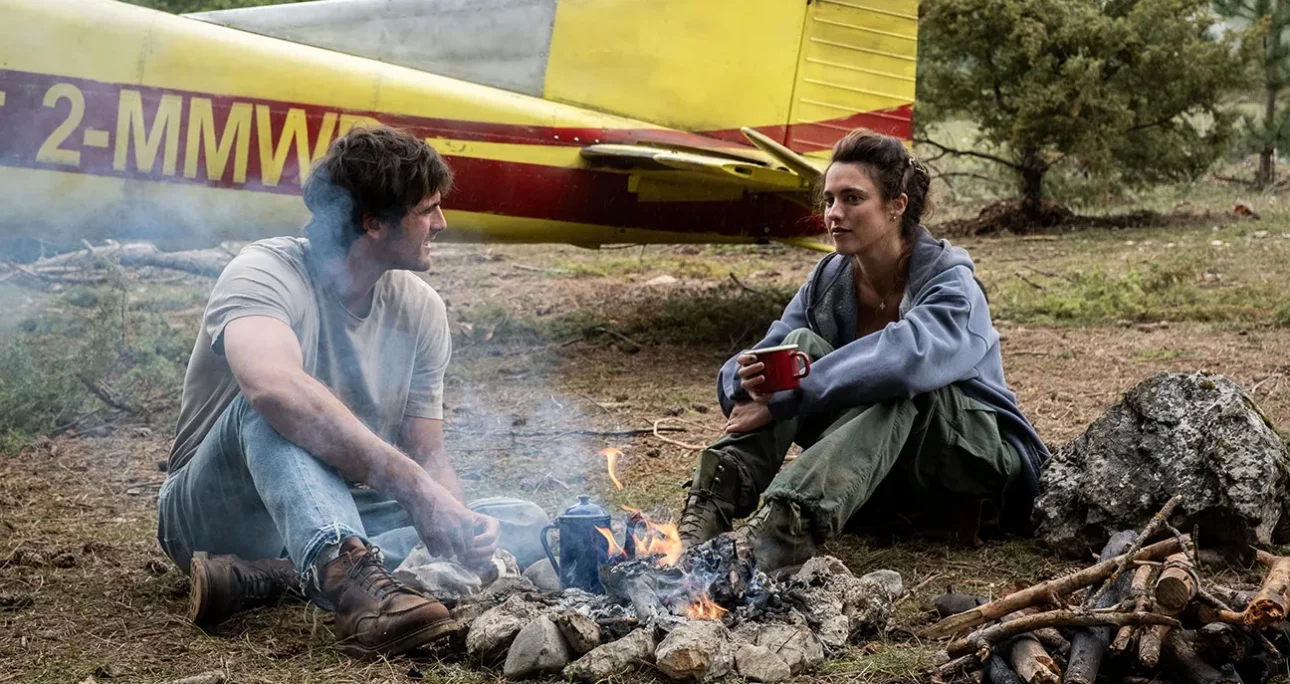
Hig and his dog Jasper navigate a post-apocalyptic landscape after most of the world has been wiped out by a virus, living in Erie, Colorado alongside his partner Bangley, played by Josh Brolin, in an uneasy but functional arrangement built entirely on survival. Everything shifts when Hig experiences another giant loss in his life and decides to take his plane and head for Grand Junction, chasing something resembling meaning within a depression that has clearly been swallowing him for years. That journey is what gives the film its emotional shape, framing the entire story less as a survival narrative and more as a man searching desperately for a reason to keep going at all. After crash landing, Hig runs into Cima and her father, finding new connection, bond, and genuine meaning at what may be his darkest point in the entire film. The threat escalates from there as dangerous and deranged apocalypse cults attack from all angles, threatening both Hig and his newfound family while Bangley is left alone back at the base in Erie with his own action-filled trouble.
Hig is a well-designed character who nonetheless feels a bit too ordinarily written for the film’s opening stretch, right up until he meets Cima and finally opens up about just how dark his mental state truly is. That opening up is the film’s key turn, and the bond that develops between Cima and Hig becomes one of the strongest and most affecting sections of the entire movie. Bangley continues to be a highlight throughout, with Brolin delivering amazing acting intensity backed by some of the film’s sharpest and most confident writing. The dynamic between Hig and Bangley gives the early stretch its edge, contrasting Hig’s grief and passivity against Bangley’s harder, more pragmatic survivalism in a way that makes their eventual separation land harder than expected. Ultimately, though, it’s Hig and Jasper’s bond that wins you over emotionally more than anything else in the film, and it’s the clearest evidence that Scott still knows exactly how to build genuine feeling when he commits to it.
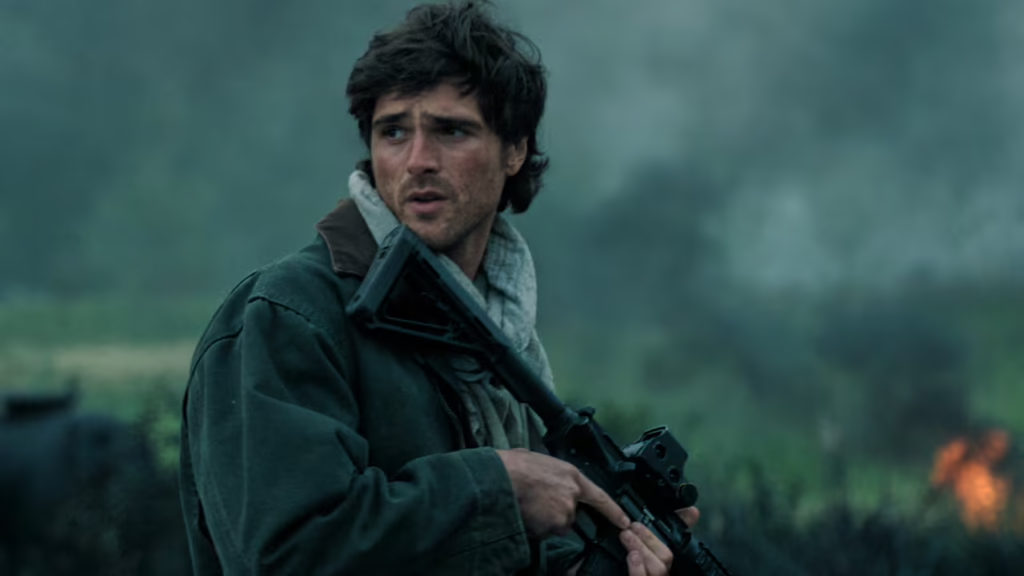
The score and frontier atmosphere work together beautifully throughout, maintaining a consistent tone across the entire runtime that keeps the film grounded even in its more scattered and uneven stretches. The mountain Telluride scenery and cinematography are genuinely gorgeous, giving the film a visual identity that separates it entirely from the generic gray wash of most post-apocalyptic filmmaking. The commentary on the stars is admittedly not going to be for everyone and is fairly basic on its own terms, but it works especially well in the moments where Hig is telling Cima about them, using something simple to convey something much larger. Those quieter scenes are where the film’s emotional register lands hardest, using the vastness of the landscape to underline just how small these characters have become in a world that no longer has room for them. Scott’s visual instincts remain fully intact even when his structural ones falter, and the film is consistently beautiful to look at regardless of how well its individual pieces fit together.
The film often feels like a puzzle that doesn’t fully fit together, which is its clearest and most persistent weakness across the runtime and the thing most likely to frustrate viewers going in cold. Scott’s modern-day virus apocalypse premise felt genuinely timely but was never fully taken advantage of, leaving a compelling and potentially pointed concept underexplored in favor of far more familiar post-apocalyptic beats. The book-to-film adaptation also doesn’t really feel accurate to its source, which didn’t bother us personally at all but will almost certainly become a point of criticism for fans of the original novel. Those structural issues keep the film from being as cohesive as its individual pieces suggest it could have been with a tighter hand guiding it. Even with all of that, none of it undermines the emotional core, which remains strong enough to carry the entire film through its rougher patches.
The Dog Stars is a film that deserved far better than the concern, hate, and total lack of press it received ahead of release, and we genuinely loved it despite many of its flaws. Hig and Jasper’s bond is the emotional heart of the entire film that gets passed on to Cima, as the strongest work Scott has done in a few years after some bigger blockbuster misfires. Josh Brolin’s Bangley and Guy Pearce’s Pa are consistent highlights as always, bringing real intensity to characters who could have easily been a one-note survivalist with no nuance. With beautiful landscapes and music to enjoy along the way, the frontier atmosphere does The Dog Stars a huge favor, making the film though polarizing, consistently visually appetizing. The Dog Stars doesn’t fully fit together as a full puzzle and never quite commits to its virus premier, but its visuals and emotional strength with a stacked cast makes it well worth your time and one we will defend despite the concern.
Twilight Score: 84.1/100