The wait is finally over. One of the most anticipated releases in film history, Christopher Nolan’s The Odyssey, shot entirely on IMAX cameras, has arrived,
and it delivers exactly what it promises: a modern-day Lawrence of Arabia, an epic of all epics, and a new benchmark for what theatrical blockbuster filmmaking can achieve. What stands out most is how deeply the film honors the poetry that inspired it. The Odyssey, first carried through generations as an oral epic before ever being written, becomes the next link in that lineage. We are the generation experiencing this story through the lens of 70mm IMAX, with sound that echoes its scale. It feels like a continuation
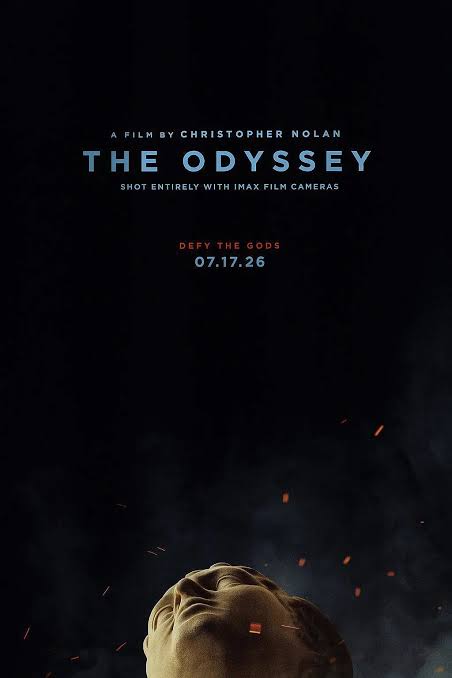
of of an oral tradition thousands of years old, now delivered in the most expansive format possible, with the scale, conviction, and authority only one filmmaker could command. It is epic not just in story, but in execution, every scene vast and resounding, each stage of Odysseus’s journey unfolding seamlessly into the next. The only thing nagging the film from perfection, a bounce back to Ithaca that starts off a bit too slow and less immersive, not quite matching the momentum of everything at sea, yet circling back to deliver one of Nolan’s best ever final acts in the same setting. The craft operates at a level that borders on overwhelming: the sound design is deeply immersive to say the least, perhaps even too loud if you can believe it, but undeniably extraordinary, the ocean scene are awe inspiring, while the storm set pieces and flashes of horror unlock this new horror genre inspiration we have yet to see from the director, all while maintaining the beautiful, deafening, jaw-dropping scale we have come to expect. It is the kind of filmmaking that simply does not exist without Nolan and his crew. The Odyssey delivers on every front, emerging as the epic of modern times and the standout in an increasingly stacked year. It is a masterful achievement, taking one of the foundational stories of Western storytelling and rendering it with a scale, terror, and humanity that fully justifies every second of its unprecedented anticipation.
The film opens with the Trojan horse, the same as the comically large popcorn bucket you see as you walk through the concessions line, in a unique beach rendition, delivering the first brilliant structural choice, starting the epic much quieter than expected, grounding the packed theater in the aftermath of the trojan war before unleashing the spectacle of the journey home the audience eventually settles into. Tom Holland’s Telemachus anchors the Ithaca threat as he tries to temper the suitors plaguing the kingdom to marry Penelope, and while his casual speech takes a bit of getting used to against the mythological setting, but the surrounding scale, sound, and Holland’s full commitment quickly smooth that transition, allowing him to grow steadily into the role as the film progresses. Anne Hathaway has always excelled under Nolan, but she may deliver her finest work yet here as Penelope. From her earliest scenes—fending off suitors while grieving her husband—she brings a guarded intelligence that makes Ithaca a place worth returning to, culminating in a performance with clear awards weight. The suitors, led by a sharply antagonistic Robert Pattinson in a turn unlike anything in his filmography, give the home front genuine menace, particularly as their threat turns toward Telemachus. His decision to leave Ithaca in search of answers about his father introduces the first true emotional stakes of this storyline, elevating it to match the scale and urgency of the ocean voyage. But the true power of the film lies in Odysseus’s journey across the seas, a progression that flows seamlessly from one sequence to the next. It moves between traditional horror, body horror, adventure, and fantasy, all realized at an unprecedented practical scale, becoming the driving force behind one of the greatest stories ever told.
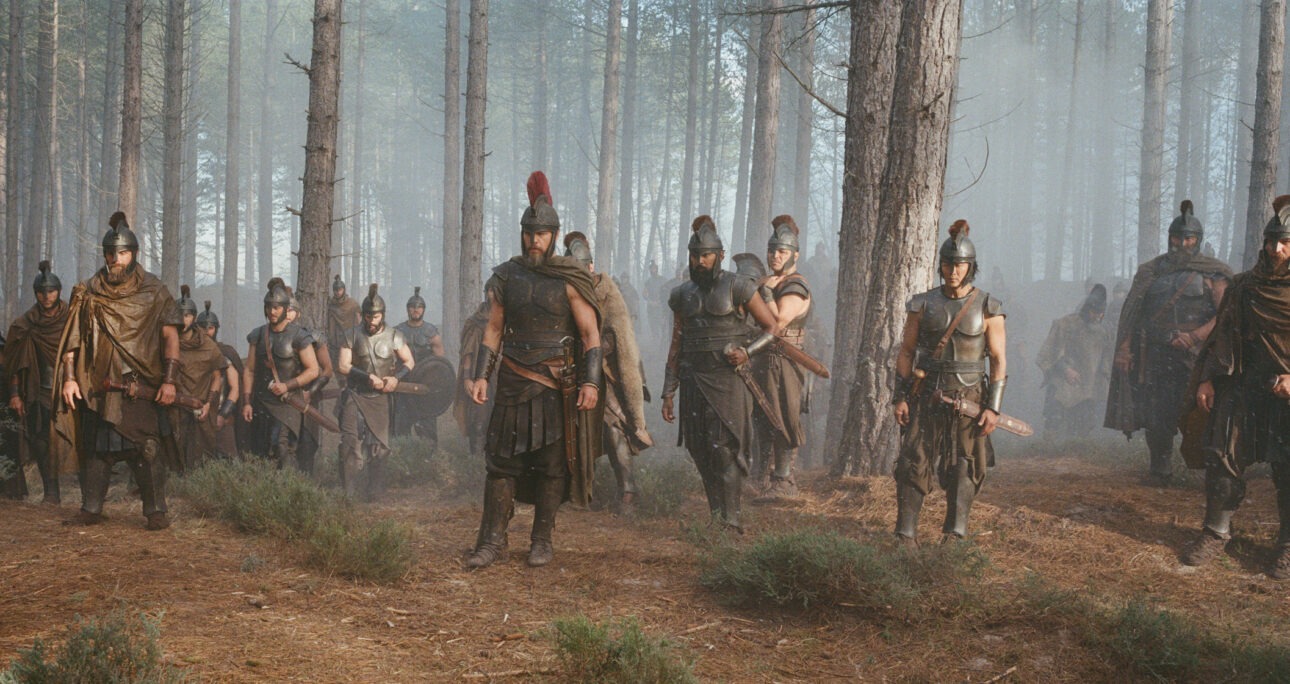
As the film shifts to Odysseus recounting his journey on Calypso’s island after the victory at Troy, the invasion itself unfolds as a masterfully executed ambush, among the finest war sequences Nolan has ever staged. Its overwhelming scale marks the first moment the full ambition of the project truly lands on the big screen, ushering in the film’s most compelling stretch. From start to finish, Matt Damon is excellent in the role, fully embodying a figure destined to live on in legend while portraying a man gradually worn down by the weight of that very myth. The film wisely centers its energy on his journey over Telemachus’s, investing most deeply where the story burns brightest. Nolan stages the cyclops as horror in every sense, and it is horrifically good, a creature sequence that is reminiscent of the vintage creature features of old, playing closer to a monster movie than a mythology lesson and its awesome. His horror instincts continue to pay off as the crew, cursed by Poseidon for the attack, are left without wind or safe passage, a mounting sense of dread settling over the voyage. The losses begin to compound, with the giants wiping out two-thirds of the crew, as the journey grows increasingly dire. Amid it, Zendaya’s Athena emerges as one of the film’s quieter strengths, a less-discussed but impactful presence who remains at Odysseus’s side through the trials of his voyage. But what convinces me the most that Nolan has career in horror if he wants it is how he handles Circe and her island, deploying visceral body horror through practical effects and makeup to transform the crew into pigs in a sequence that is as grotesque as it is mesmerizing, one of the most haunting and wickedly good scenes of the decade. As it is clear now, a mutual understanding from all audience members that every sequence, every stop on this tumultuous journey will be another example of something we haven’t seen before, and the underworld is no different, yet another defining chapter of the original myth rendered with creativity, care, and seamless execution, setting Odysseus on a path that will test the very limits of who he is.
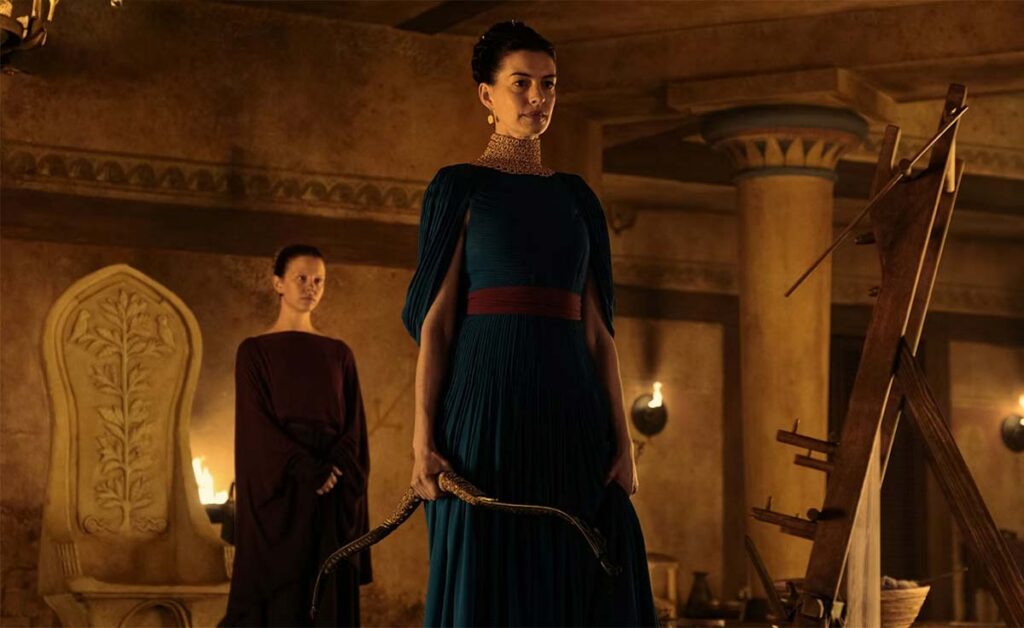
The filmmaking here is Nolan operating with total command of the largest canvas ever given to a director, the first film shot entirely on IMAX, and every single frame justifies it, from the masterful ocean shots, to the booming storm sequences that bring the goosebumps and watery eyes, thunderously loud like Zeus, is more present than any casting of the character could ever bring. The sound design will be the film’s most divisive element—because IT IS LOUD, at times overwhelmingly so—but it is a bold swing we would take every time. For us, it connects cleanly, a risk that lands with full force. It’s a physical experience that is unforgettable and unique. I feel like I must repeat an epic, as the score and effects hit with a force that makes the theater itself feel like part of the storm of Ancient Greek waters. It is an inherently episodic story, one that inevitably invites comparison to Lawrence of Arabia. In the same way that film stood as a Hollywood magnum opus alongside Casablanca and Citizen Kane, The Odyssey makes a case for itself as a modern equivalent—definitive of this era of filmmaking, yet far rarer and more impactful than the prevailing blockbuster or indie trends, creating the sense that you are witnessing a genuine leap in epic storytelling. Its structural choices and editing are quietly as brilliant as its scale. The sirens sequence is executed with precision, later echoed when Odysseus finally reunites with his wife after years of psychological strain, a more restrained, but still distinctly Nolan-esque use of nonlinearity. And in the emotional crescendo of Telemachus realizing the beggar is his father, every cut lands with purpose, each moment designed to hit with full force and leave you unraveling in the best way. Its editing is so well executed that The Odyssey becomes a three-hour film driven by constant momentum and sustained feeling, moving at a near-perfect pace—an epic in the truest sense.
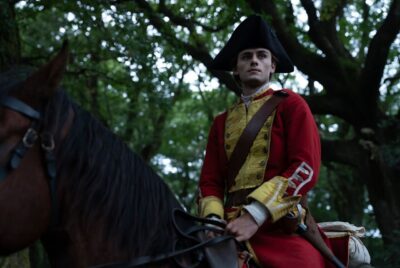
The film’s time structures converge as Odysseus returns home in disguise and learns of the plan to ambush his son, saving Telemachus in a switch that marks an epic start to the back half of the film—the two storylines finally colliding with all the force the entire runtime has been building toward, and a structural payoff that rewards the patience the Ithaca thread demanded. Telemachus learning the beggar is his father lands as a genuinely emotional scene as the final act seemingly begins, and it’s here that Holland fully earns his casting, far stronger than in the opening stretch, finally matching the gravity of the material around him. Odysseus’s reveal, confessing to being the architect of the Trojan Horse and the man who defied the gods grounds the finale in the myth’s moral weight rather than pure spectacle, the hero forced to account for his own legend before he can reclaim his life, which is exactly the kind of thematic care that separates this from every lesser epic. Penelope finally relenting and hosting the challenge for the suitors, with Odysseus participating still in disguise alongside Telemachus to assure his protection, builds to the payoff the entire story has promised, and when he wins the challenge and kills the suitors — winning back his home and leaving Telemachus as king — the sequence lands with the cathartic force of three hours perfectly spent. The film closes with Odysseus heading west with Penelope to honor his fallen men, a perfect ending note: the epic resolving not in triumph alone but in duty and love, epic from start to finish in every sense of the word.
The Odyssey is the movie event of the decade, delivering on every seemingly impossible expectation, the modern-day magnum opus, the epic of all epics, and quite possibly one of the crowning achievements of Christopher Nolan’s career. What lingers most is the project’s poetry: a story passed down orally for generations before it was ever written, now retold for ours through a 70mm IMAX lens—the oldest story in Western literature given a definitive modern form, with Matt Damon forever fixed as the image of Odysseus. The ensemble is staggering—Damon fantastic, Hathaway equally Oscar-worthy, Pattinson relishing his cowardly villainy, Bernthal both determined and magnetic, Safdie larger than life, and Holland and Zendaya delivering performances that far surpass the media stories. Only the Ithaca storyline in the film’s opening keeps it from absolute perfection, a half-step behind the mythological spectacle surrounding it—but when the lone complaint is that one thread is merely very good while everything else is transcendent, the film has already won. The Odyssey immediately enters the conversation among the greatest epics ever put to film, a movie that demands the biggest screen on the planet and rewards it with an experience that, like its source, feels destined to be passed down—earning a 99/100 from TwilightRoom.
TwilightRoom Score 99.3/100