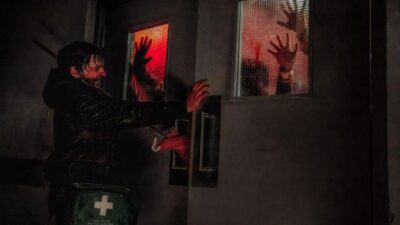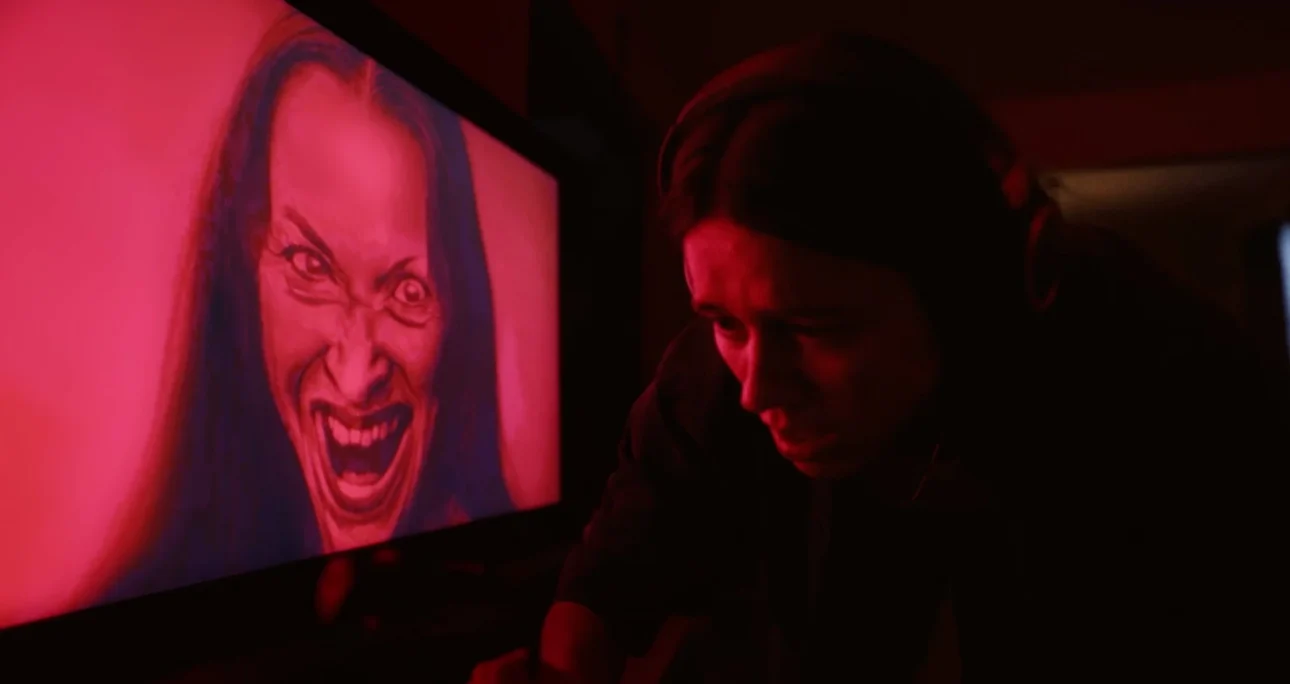
Undertone is a unique new A24 horror experience from director Ian Tuason, a conceptual exercise in building tension primarily through sound and sensory immersion, boldly marketed as “the scariest movie you will ever hear.”
The film itself leans heavily into the concepts of quiet anticipation, the audience’s perception of negative space, and subliminal suggestion rather than a traditional horror structure, making the film as divisive as it gets in the genre.

It presents itself as a narrative feature that has a new cool concept, but delivers as more of a theatrical experience than a fully realized narrative feature film, as its concept far surpasses its plot in quality. Undertone is a creative and conceptual new look at the horror film genre that succeeds in building tension through sound design and atmosphere, but ultimately feels much more like an experience than a fully cohesive narrative feature film.
Evy starts the story in her home that she grew up in to take care of her sick and dying mother, while continuing to run her horror podcast that she makes with her friend Justin. She resembles a skeptic as the two go through audience horror stories and ghost/demon experiences and try to prove or disprove them, this time going over 10 audio files sent from an anonymous email that becomes the key case study for the entirety of the film. The files began to lead down a rabbit hole of subliminal messaging in childhood songs, like London Bridge is falling down, that slowly, when played in reverse, began to affect and haunt her in her quiet house. Evy begins to experience odd things moving or her mother changing places when she shouldn’t be able to as the film uses the sound of the noise cancelling headphones to build up anticipation and horror through the audio of the film. The film moves to a dramatic conclusion, as what belongs on the audio files the two are listening to, begins to blend into real life, making the happenings of the files feel more and more real as the story comes to a close. It’s a story plot that is extremely simple in design and execution taking that idea and using the concept of horror to make it something new.
The film’s biggest strength is found in its gimmick, its sound design, and how it plays with the audience’s attention. It’s a concept designed for the big screen, the dark room where all attention is required, the film constantly keeps the audience hyper aware and intensely focused on the negative space. It uses the repetition of the subliminal messaging it establishes to get in the audience’s ear with repetitive audio cues that replace the typical visual scares that you would expect to see in a horror film. It’s a unique concept that is in my opinion executed well on how it wants the viewer to feel, it’s unique and at certain moments of building tension, extremely effective.
However, this is where the positives begin to turn into negatives, the film feels like It is trying to achieve a goal rather than deliver a coherent, nuanced story. The theater becomes more of a sensory experience, that while effective, leaves behind a semblance of the complexities in storytelling that make a cohesive and solid film. Simply put, the narrative is extremely basic and struggles to fully capture intrigue at any moment from its audience, making the concept 90% of the interest that the film brings. This idea could have possibly been expanded upon, by making the experience so tension- and horror-inducing that the plot can be allowed to be simple, but with no real push in the final act that elevates the experience beyond tension-building thinking, the film just lacks any true pay off or commitment. The film shares many traits with hotly debated Skinamarink, another experimental, slow-burn single-house horror piece that lets its high-concept design drive the intrigue more than conventional storytelling. While this film is drastically better at adding an importance to its structure by the use of sound establishing some nuance, it’s not enough to fully separate itself as the good version of this type of film entirely.
Overall, Undertone succeeds as a conceptual horror experience that has key aspects that really intrigue its audiences, taking a more sensory-driven approach to horror that has not been done before. But falls short as a fully realized narrative film and a complete story that delivers a strong enough payoff in its final act. The film’s success in tension building, atmosphere and sound design are what earns it its rating, but ultimately not that high of one for all the reasons mentioned. It’s a creative horror concept that shows real promise, but desperately needed stronger narrative development to fully deliver on the idea, earning it a 65/100 from the twilight room.
Twilight Room Score: 65.7/100