The Hidden Fortress is one of the largest-scale films of Akira Kurosawa’s middle career and one of the most impeccably executed, an
adventure epic of enormous proportion that is endlessly cited as the film that inspired Star Wars while proving itself to be so much more than a footnote in George Lucas’ story. This Hidden Fortress review is this week’s Criterion Tuesday feature. Coming off the weight of Ikiru and Seven Samurai, Kurosawa set out here to make a pure adventure picture, and the result is a film that moves with the energy of a crowd-
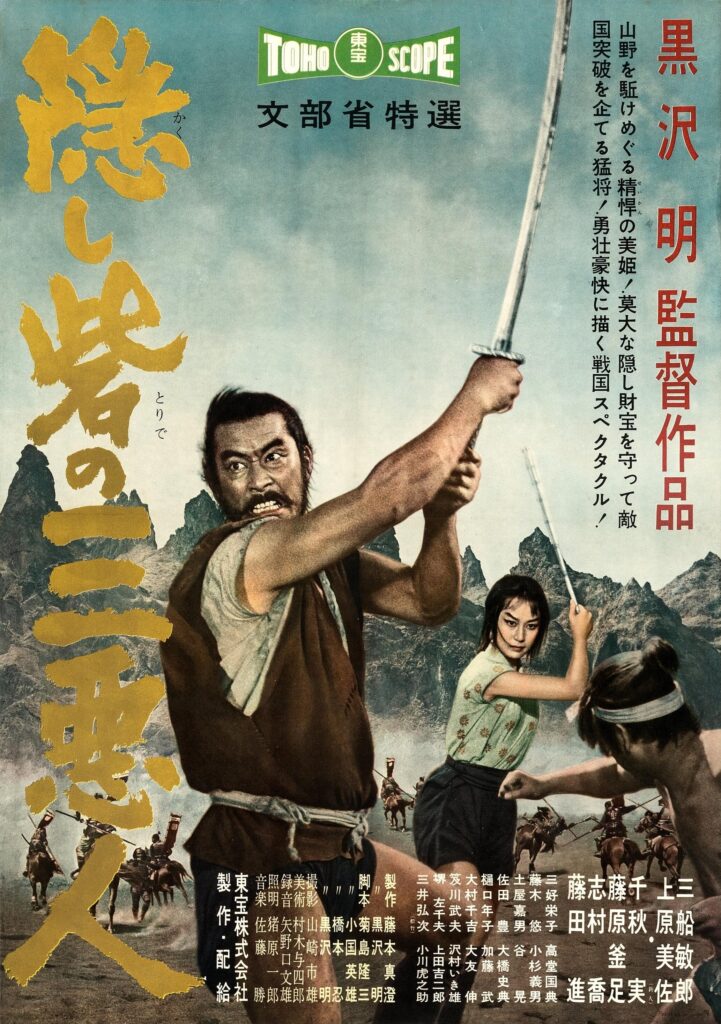
pleaser while still carrying every ounce of the craft and composition that defined his greatest work. Toshirō Mifune is yet again brilliant, delivering a determined yet simmering performance as a general smuggling a princess and her clan’s fortune across enemy territory, and Kurosawa places him inside some of the most striking mountain settings he ever shot, letting the landscape do as much storytelling as the screenplay. The decision to tell this grand story through the eyes of its two lowliest, greediest characters gives the film a comedic, grounded perspective that keeps the scale from ever swallowing its humanity, a structural choice that would go on to shape blockbuster filmmaking for decades. The Hidden Fortress is the definitive combination of great writing and great scale in Kurosawa’s filmography, the film where his style and his substance meet at full strength and remind you exactly why he remains the greatest filmmaker of all time.
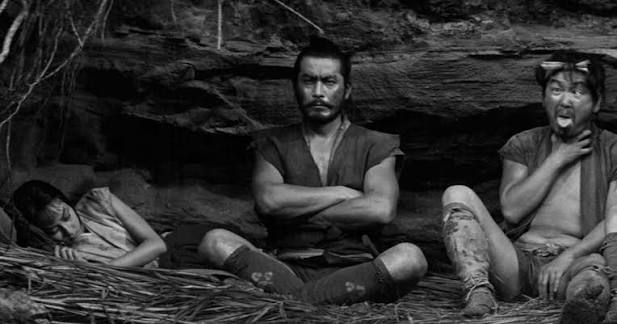
Set in sixteenth-century Japan, the film opens on Tahei and Matashichi, two bickering, cowardly peasants who escape forced labor after their side loses a civil war and spend most of their screen time scheming over who gets the bigger share of anything they find. When they stumble across a stash of gold hidden inside sticks of firewood, they take up with a gruff stranger who seems to know where more of it is, never realizing he is General Rokurōta Makabe, the defeated clan’s greatest warrior. Makabe is secretly guarding Princess Yuki and her clan’s treasury, and he needs to get both across enemy lines to an allied province, which means the peasants’ greed makes them exactly the kind of unreliable cover he can use. Having the princess pose as a mute to hide her identity is a terrific piece of construction, because it forces Misa Uehara to play the film’s most commanding character almost entirely through bearing and expression. Minoru Chiaki and Kamatari Fujiwara are a perfect comedic pairing as the peasants, and Kurosawa trusts them to carry the audience through the plot without ever letting their foolishness undercut the danger surrounding them.
Mifune’s Makabe is one of his most controlled performances, a man of enormous physical presence who spends most of the film holding his anger in check for the sake of a mission he cannot afford to fail, and every flash of that anger breaking through lands with real force. This was Kurosawa’s first film shot in widescreen, and he uses the format with the confidence of someone who had been waiting for it his whole career, filling the frame with jagged mountain passes, sweeping valleys and long processions of soldiers that give the journey a genuine sense of distance. Shooting on location around Mount Fuji gives the film a physical reality that no studio could replicate, and the mountain locations Kurosawa builds the action around are some of the coolest environments he ever worked in. Masaru Satō’s score keeps the whole thing moving with a propulsive adventure energy, while Eiji Tsuburaya, fresh off Godzilla, quietly handles the effects work that makes the larger set pieces possible. The famous wipe transitions, later borrowed wholesale by Lucas, give the film a brisk, almost storybook rhythm that keeps a nearly two-and-a-half-hour runtime feeling light on its feet.
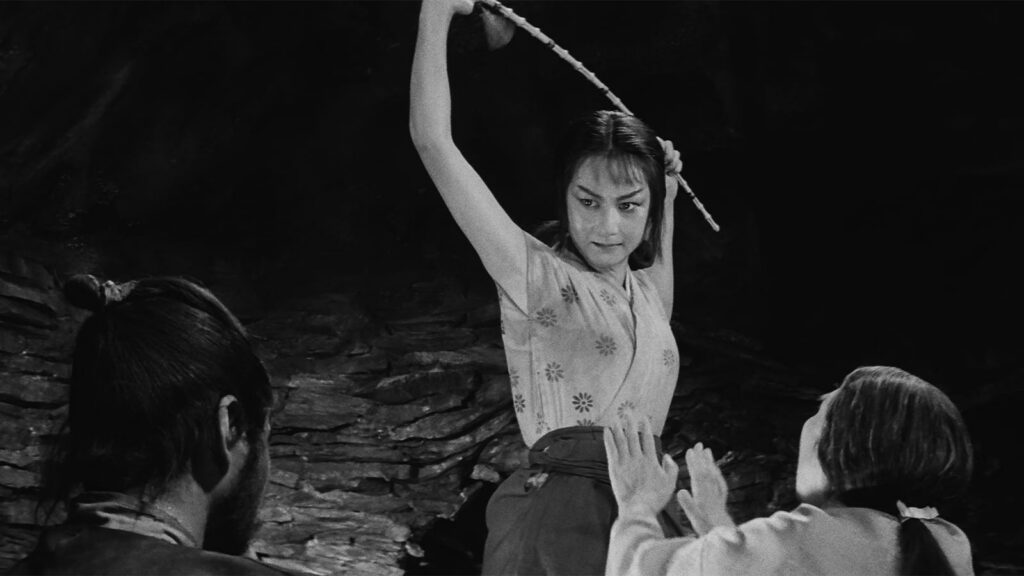
As the film settles into its primary relationship between Makabe and Princess Yuki, the Star Wars comparisons really start to pile up, and it is here that the action, dialogue and plot all drive forward together into a tremendous final hour. Yuki’s arc is the emotional core of the back half, as a princess raised behind fortress walls finally sees what the war has done to her own people, and the fire festival sequence, where she joins the dancing and finds something like freedom, is one of the most beautiful passages Kurosawa ever staged. All of it builds toward the massive spear duel between Makabe and his old rival Hyōe Tadokoro, shot with incredible clarity and staging, scored perfectly and set against a landscape that makes the fight feel genuinely monumental. What makes the duel land is the respect between the two men, which pays off later in one of the great reversals in Kurosawa’s filmography when loyalty and honor finally win out over orders. By the time the peasants receive their reward, the film has earned every bit of warmth it lets itself have, closing an adventure that never once loses track of the people inside it.
Kurosawa made The Hidden Fortress deliberately as pure entertainment after the heavier dramas that preceded it, as one of Tōhō’s early widescreen productions, before releasing it in Japan in December of 1958. The shoot ran long and over budget, and Toho’s frustration with Kurosawa’s slow, meticulous pace was a major factor in pushing him to launch his own production company the following year, which means this film quietly reshaped the rest of his career. It became Toho’s biggest hit of 1958 and the fourth-highest-grossing film in Japan that year, standing as Kurosawa’s most commercially successful picture until Yojimbo arrived three years later. Kurosawa won the Silver Bear for Best Director at the Berlin International Film Festival, confirming the film’s reputation abroad even as it remained overshadowed by Seven Samurai and Rashomon in the West. It was George Lucas’ public acknowledgment of its influence on Star Wars that finally pulled it out of critical neglect. Lucas himself has said the strongest borrowing was telling the story through its two lowliest characters, who became C-3PO and R2-D2, with the princess plot closer to coincidence.
The Star Wars connection is what brings most people to The Hidden Fortress today, but it ends up being the least interesting thing about a film this confident, this funny and this beautifully made. Kurosawa found a way to make an epic that feels both enormous and intimate, using two greedy peasants as the audience’s window into a world of generals, princesses and shifting loyalties without ever condescending to any of them. Mifune is magnificent, the widescreen photography is breathtaking and the final hour is as purely satisfying as any adventure filmmaking from its era. It may not reach the absolute heights of Seven Samurai, but it stands as the clearest example of Kurosawa having fun with every tool he had mastered, and it shows. It’s a great writing and scale combination from the greatest director who ever lived, definitive of the style and substance that made him who he was, earning an 89/100 from TwilightRoom.
TwilightRoom Score: 89.1/100